Category Archives: Banks

Penny Pritzker Obama 2008 national finance chairwoman, Economic Recovery Advisory Board, Skills for America’s Future, Obama Council for Jobs and Competitiveness, Superior Bank origin of sub prime crisis

Penny Pritzker Obama 2008 national finance chairwoman, Economic Recovery Advisory Board, Skills for America’s Future, Obama Council for Jobs and Competitiveness, Superior Bank origin of sub prime crisis

“We intend to close loopholes that allowed big financial firms to trade risky financial products like credit defaults swaps and other derivatives without
oversight; to identify system-wide risks that could cause a meltdown; to strengthen capital and liquidity requirements to make the system more stable; and to ensure that the failure of any large firm does not take the entire economy down with it. Never again will the American taxpayer be held hostage by a bank
that is “too big to fail.”…Barack Obama

“Democratic presidential contender Barack Obama says he’ll crack down on fraudulent sub-prime lenders. If he really means it he can start by firing his campaign finance chair, Penny Pritzker. Before taking over Obama’s campaign finances, she headed up the borderline shady and failed Superior Bank. It collapsed in 2002. The bank’s sordid story and its abominable role in fueling the sub-prime crisis are well known and documented. It engaged in deceptive and faulty lending, questionable accounting practices, and charged hidden fees. It did it with the sleepy-eyed see-no-evil oversight of federal. It made thousands of dubious loans to mostly poor, strapped homeowners. A disproportionate number of them were minority.

Obama’s home state, Illinois, ranked near the top of thee states in the percentage of sub-prime mortgages. Nearly 15 percent of home loans were sub-prime according to the Mortgage Bankers Association. But that only tells part of the tale. According to the Woodstock Institute, a Chicago non-profit that studies housing issues, the sub-prime fall-out was far higher in the predominantly black and Latino neighborhoods of South and Southwest Chicago.

The predictable happened when many of those lost their homes. When the bank collapsed Pritzker and bank officials skipped away with their profits and reputations intact. Aside from the financial and personal misery sub prime lenders caused the thousands of distressed homeowners, sub-prime lending has been a major cause of the housing crisis in many areas, and has dealt a sledgehammer blow to the economy. Obama has said nothing about Pritzker, Superior Bank, or their dubious practices.”…Huffington Post, February 29, 2008

“One could make the argument that Pritzker was the most important person in Barack Obama’s presidential bid – except, perhaps, for Obama himself. A longtime Obama friend, Pritzker was national finance chairwoman for the Obama campaign throughout his 2008 presidential effort. She helped him raise a record $750 million from a dizzying array of donors.
Obama’s huge fundraising advantage not only gave him clout during the primaries against Sen. Hillary Rodham Clinton (D-N.Y.), but also provided the means to bypass federal funding for the general election and dramatically outspend Sen. John McCain (R-Ariz.)…Washington Post 

“Why did Obama employ Robert Bauer of Perkins Coie, to request an advisory opinion on FEC matching funds that he was not eligible for?”…Citizen Wells

More on Obama’s 2008  National Finance Chairwoman and economic advisor Penny Pritzker.

From Consortium News February 28, 2008.

“Though Superior Bank collapsed years before the current sub-prime turmoil that is rocking the world’s financial markets – and pushing those millions of homeowners toward foreclosure – some banking experts say the Pritzkers and Superior hold a special place in the history of the sub-prime fiasco.

“The [sub-prime] financial engineering that created the Wall Street meltdown was developed by the Pritzkers and Ernst and Young, working with Merrill Lynch to sell bonds securitized by sub-prime mortgages,” Timothy J. Anderson, a whistleblower on financial and bank fraud, told me in an interview.

“The sub-prime mortgages,” Anderson said, “were provided to Merrill Lynch, by a nation-wide Pritzker origination system, using Superior as the cash cow, with many millions in FDIC insured deposits. Superior’s owners were to sub-prime lending, what Michael Milken was to junk bonds.”

In other words, if you traced today’s sub-prime crisis back to its origins, you would come upon the role of the Pritzkers and Superior Bank of Chicago.”

http://www.consortiumnews.com/2008/022708a.html

From Chicago Magazine December 2002.

“”They were always more interested in building an empire than in getting their name in the newspaper,” says Patrick Foley, formerly president of Hyatt Hotels Corporation. “They just didn’t enjoy that kind of notoriety.”

Last year, however, the Pritzkers found themselves most uncomfortably in the public eye after the stunning collapse of Superior Bank, the Oakbrook Terrace–based savings and loan they jointly owned with the New York real estate developer Alvin Dworman. The institution’s failure is “a tale of gross mismanagement,” says George Kaufman, a finance professor at Loyola University Chicago. “[Superior] was engaged in relatively unethical practices, fancy-footwork accounting, playing it very close to the edge.” Kaufman says many share in the blame for the mess-the bank’s managers, directors, and auditors, as well as banking regulators-but he also wonders how the Pritzkers, as co-owners, could have allowed it to happen. “One of the great mysteries to me is what the Pritzkers were up to, why they took these chances,” he says. “It makes no sense given their wealth and visibility.””

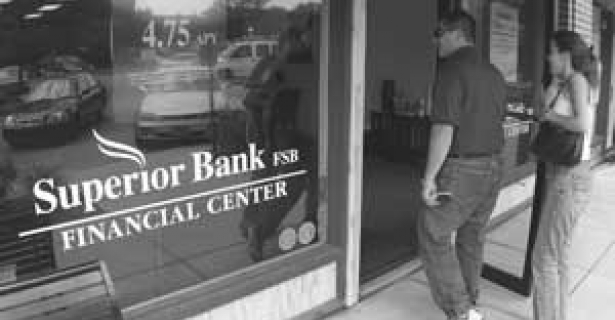
“The family’s most agonizing setback, however, was the stunning collapse last year of the once high-flying Superior Bank. The thrift had come into the Pritzker fold in 1988, when Jay Pritzker and Alvin Dworman-old social friends and partners in several past business ventures-put up $42.5 million for the insolvent Lyons Savings Bank, as it was then called, in return for an estimated $645 million in federal tax credits and loan guarantees. (By one estimate, it would have cost the government $200 million less simply to shut Lyons down.) Although Dworman had agreed to run the renamed Superior Bank out of his New York office, Jay deputized his niece Penny-a Harvard educated go-getter who had just earned her law degree and M.B.A. from Stanford-to help keep tabs on the investment. She served as chairman of Superior from 1989 to 1994, long enough for the bank to regain its financial health and embark on an aggressive new strategy, making high-interest home and auto loans to people with bad credit. For a time, that strategy appeared to work like a charm, yielding big profits-and large dividends for the Pritzkers and Dworman.

In reality, Superior was spiraling into ruin. Although the details are complicated, the bank’s fall stemmed from a risky business strategy and from poor oversight by the bank’s directors, according to investigations by banking regulators. Superior became heavily concentrated in high-risk assets connected with its subprime lending business, and then used “unrealistic and overly optimistic assumptions” to record the value of those assets, according to a report by the inspector general of the Federal Deposit Insurance Corporation. In language redolent of the corporate accounting scandals that have rocked Wall Street recently, the report adds that by using “liberal interpretations of accounting principles” Superior was able to “report impressive net income figures that masked the net operating losses the institution was actually experiencing.” Those phony “profits,” by the way, allowed Coast-to-Coast Financial Corporation, the holding company owned jointly by the Pritzkers and Dworman, to collect more than $200 million in dividends from 1993 to 1999-money the bank desperately could have used as it tottered toward insolvency.

After the Pritzkers and Dworman failed in July of last year to follow through on a plan to inject $270 million into the bank, Superior was seized by the Office of Thrift Supervision and eventually placed in receivership under the FDIC. Last December, to avoid being punished for Superior’s failure, the Pritzkers agreed to pay the FDIC $460 million while admitting no wrongdoing. Because $360 million of that payment was to be spread out interest free over 15 years, the settlement was worth an estimated $335 million in today’s dollars. But that won’t cover all the damage. Even with the settlement, Superior’s failure is expected to cost the federal thrift insurance fund an estimated $440 million.

Meanwhile, the Pritzkers still have not put their Superior troubles entirely behind them. Tom and Penny Pritzker are defendants (along with Dworman, several officers and directors, and the bank’s auditor, Ernst & Young) in a federal civil racketeering suit brought on behalf of Superior’s uninsured depositors (those with deposits in excess of the federally insured $100,000). Although the 1,400 uninsured depositors so far have recovered about 55 percent of the more than $65 million they lost in the collapse, they are still out almost $30 million, according to Clint Krislov, the lawyer for the plaintiffs. By contrast, the Pritzkers may not have fared so badly. Counting the tax credits and deductions they originally received and the dividends they collected over the years, “they appear not to have lost money on the deal,” Krislov says. (A source close to the family says the Pritzkers did lose money in Superior, and asserts that the lawsuit is without merit.)

* * *
The Superior scandal stained virtually everyone connected with it-the bank’s managers and directors, the accountants who signed off on its financial statements, the banking regulators who failed to act aggressively as early as the mid-nineties, when Superior’s problems were fast becoming apparent, and, of course, the owners. As the fallout spread, the Pritzkers worked feverishly to control the damage. They claimed that they had been “passive investors” while Dworman’s people ran the show (Dworman said the Pritzkers shared in the blame). They also made the case that Superior’s auditor had continued to give favorable opinions on the bank’s accounting over the years. On that score, the Pritzkers appeared to gain some vindication in early November of this year when the FDIC sued Ernst & Young for fraud in its audit of Superior, and sought at least $2.19 billion in punitive and compensatory damages. (Ernst & Young denied responsibility for Superior’s collapse and said it would vigorously fight the charges.)

To some, however, the Pritzkers were hardly the innocents they made themselves out to be. The family, after all, controlled half the board seats of the bank’s holding company, which benefited from all that dividend income, and the Pritzker Organization’s chief financial officer, Glen Miller, chaired the bank’s audit committee. Although Penny had stepped down as the bank’s chairman in 1994, she remained a director of its holding company.

“No one should have had any illusions about what was going on,” says Bert Ely, a banking consultant in Alexandria, Virginia, who tracked the Superior story. “[Superior] was reporting gains that were unrealistically high, which allowed [it] to pay big dividends [to the Pritzkers and Dworman]. It was a lot like Enron and WorldCom-reporting profitability that wasn’t there. Their financial people should have been able to figure that out. If they truly didn’t understand the bank’s fundamentally unworkable business model, then the Pritzkers have bigger problems than Superior.”

The Pritzkers said in a statement that the settlement was simply “the right thing to do,” reflecting the family’s “historical commitment to stand behind their investments.” That may have been true. But it also entitles them to 25 percent of any sum the government collects in its $2.19-billion suit against Ernst & Young. Beyond that, the settlement made an ugly story go away. “I am convinced that the Pritzkers wanted to get their name off the front page,” says Ely. “They had stepped into a pile of horse manure, and they were highly embarrassed.””

http://www.chicagomag.com/Chicago-Magazine/December-2002/Tremors-in-the-Empire/
 

Penny Pritzker Obama Economic advisor fundraiser, Media Matters aka Times of 1984, Destroy banks and economy, Blame others

Penny Pritzker Obama Economic advisor fundraiser, Media Matters aka Times of 1984, Destroy banks and economy, Blame others

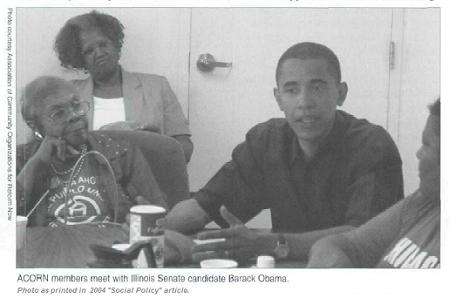
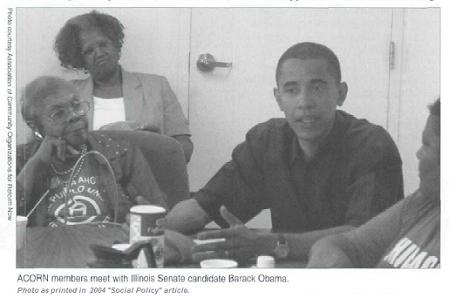
“During its 15 years in New York City, ACORN has helped squatters claim derelict city-owned property, forced bankers to invest in low-income communities, and organized a war against the city’s workfare program.

It’s also developed a reputation for no-holds-barred tactics—getting results through adversarial campaigns against bankers, politicians and bureaucrats using confrontation and concession rather than consensus.”…ACORN document, February 1999

“We intend to close loopholes that allowed big financial firms to trade risky financial products like credit defaults swaps and other derivatives without
oversight; to identify system-wide risks that could cause a meltdown; to strengthen capital and liquidity requirements to make the system more stable; and to ensure that the failure of any large firm does not take the entire economy down with it. Never again will the American taxpayer be held hostage by a bank
that is “too big to fail.”…Barack Obama

“Democratic presidential contender Barack Obama says he’ll crack down on fraudulent sub-prime lenders. If he really means it he can start by firing his campaign finance chair, Penny Pritzker. Before taking over Obama’s campaign finances, she headed up the borderline shady and failed Superior Bank. It collapsed in 2002. The bank’s sordid story and its abominable role in fueling the sub-prime crisis are well known and documented. It engaged in deceptive and faulty lending, questionable accounting practices, and charged hidden fees. It did it with the sleepy-eyed see-no-evil oversight of federal. It made thousands of dubious loans to mostly poor, strapped homeowners. A disproportionate number of them were minority.

Obama’s home state, Illinois, ranked near the top of thee states in the percentage of sub-prime mortgages. Nearly 15 percent of home loans were sub-prime according to the Mortgage Bankers Association. But that only tells part of the tale. According to the Woodstock Institute, a Chicago non-profit that studies housing issues, the sub-prime fall-out was far higher in the predominantly black and Latino neighborhoods of South and Southwest Chicago.

The predictable happened when many of those lost their homes. When the bank collapsed Pritzker and bank officials skipped away with their profits and reputations intact. Aside from the financial and personal misery sub prime lenders caused the thousands of distressed homeowners, sub-prime lending has been a major cause of the housing crisis in many areas, and has dealt a sledgehammer blow to the economy. Obama has said nothing about Pritzker, Superior Bank, or their dubious practices.”…Huffington Post, February 29, 2008

“As a businesswoman and education advocate, I have spent much of my life working to improve America’s economic competitiveness — and put the American Dream within reach for more people.”…Penny Pritzker

Birds of a feather flock together. The old saying seems to be true. Take Barack Obama and Penny Pritzker. They both have done their part to destroy banks and blame others for the devastation. They both use Media Matters which looks a lot like the Times of George Orwell’s “1984” to divert attention away from them.

Before I present more details on Penny Pritzker and her collaboration with Obama, here is an interesting article by David Moburg from November 8, 2002.

“Breaking the Bank”

“After federal regulators closed the $2.3 billion Superior Bank in July 2001, investigations revealed that the suburban Chicago thrift was tainted with the hallmarks of a mini-Enron scandal. New legal developments are adding additional twists, including racketeering charges. And yet the bank’s owners, members if one of America’s wealthiest families, ultimately could end up profiting from the bank’s collapse, while many of Superior’s borrowers and depositors suffer financial losses.

The Superior story has a familiar ring. Using a variety of shell companies and complex financial gimmicks, Superior’s managers and owners exaggerated the profits and financial soundness of the bank. While the company actually lost money throughout most of the ’90s, publicly it appeared to be growing remarkably fast and making unusually large profits. Under that cover, the floundering enterprise paid its owners huge dividends and provided them favorable loans and other financial deals deemed illegal by federal investigators.

Superior’s outside auditor, which doubled as a financial consultant, engaged in dubious accounting practices that kept feckless regulators at bay. Many individuals—disproportionately low-income and minority borrowers with spotty credit records—had apparently been exploited through predatory-lending techniques, including exorbitant fees, inadequate disclosure and high interest rates. In the end, more than 1,000 uninsured depositors lost millions of dollars in savings in one of the biggest bank failures of the past decade.

Yet unlike Enron, the people behind Superior’s collapse were not nouveau-riche corporate hustlers, but members of Chicago’s Pritzker family. The Pritzkers, whose two current patriarchs—Robert and his nephew Thomas—tie for 22nd place on Forbes’ list of the richest Americans, own an empire valued at more than $15 billion, including the Hyatt hotel chain, casinos, manufacturers and real estate, and they are major contributors to both political parties. They were equal partners in the private ownership of Superior with New York real estate developer Alvin Dworman, a longtime associate of Thomas’ father, Jay Pritzker, who died in 1999.

And Superior’s accounting and consulting was not provided by the disgraced Arthur Andersen, but by Ernst & Young. When regulators shuttered the bank, the publicity-shy Pritzkers, who take pride in their philanthropy (such as the prestigious international architecture award in the family name) quickly negotiated what appeared to be a generous settlement to stay out of the newspapers and the courtrooms.

But now both the Pritzkers and Ernst & Young may face the legal and public relations uproar they were trying to avoid. On November 1, the Federal Deposit Insurance Corporation (FDIC) sued Ernst & Young for more than $2 billion. The FDIC alleges that the firm concealed its improper accounting practices at Superior to facilitate the sale of its consulting unit for $11 billion, leading to Superior’s insolvency and ultimately costing the FDIC $750 million. Ernst & Young denies responsibility, blaming the bank’s managers and board, failed regulation and changing economic conditions. Investigators from the FDIC, Treasury Department and the General Accounting Office (GAO) had cited all those causes for Superior’s failure, but also had criticized Ernst & Young’s flawed work and conflicts of interest.

Meanwhile, in a case that has received no public notice, uninsured depositors are bringing a charge of financial racketeering against one-time board chairwoman Penny Pritzker, her cousin Thomas Pritzker, Dworman, other bank principals and Ernst & Young. In this federal class-action suit filed under the RICO (Racketeering Influenced and Corrupt Organizations) statute, plaintiffs’ attorney Clint Krislov claims that those who controlled Superior induced depositors to put money in the bank, “corruptly” funneling money out of the bank to “fraudulently” profit the owners. Pritzker attorney Stephen Novack says that the defendants will ask to dismiss the case as having no merit. Such a RICO suit has rarely, if ever, been used to recover money lost in a bank failure, partly because the owners in such cases, in the words of bank consultant Bert Ely, “usually don’t have a pot to piss in.” But the Pritzkers have a gold-plated pot.

This may not be the last of legal battles stemming from the Superior failure. Published reports indicate that a federal grand jury has been investigating potential criminal wrongdoing and that the Internal Revenue Service could press claims against the owners for tax evasion.

————–

The problems at Superior Bank date back to at least 1988, when the Federal Home Loan Bank Board, in an effort to conceal the depths of the developing savings-and-loan crisis, hastily made generous arrangements for the takeover of several failed thrifts. The Pritzkers and Dworman bought the failed Lyons Federal for the relatively modest price of $42.5 million, with each using a shell corporation to control half of Coast-to-Coast Financial Corporation (CCFC), a holding company created to own Superior.

Superior opened for business with substantial federal assistance and guarantees, but the Pritzkers also reportedly received $645 million in tax credits as an inducement to buy Lyons. This was not the first Pritzker-Dworman joint venture into banking. In 1985, the partners had acquired New York-based River Bank America. But in 1991, federal and state regulators closed River Bank, which was engaged in large-scale real estate speculation, when they discovered that the bank had inadequate capital and was badly managed. Nelson Stephenson, the chief financial officer of River Bank, later became chairman of Superior.

In 1992, the Pritzkers and Dworman transferred ownership of Alliance Funding Company, a nationwide mortgage banking company the partners had founded in 1985, to Superior Bank, which began specializing in selling securities backed by subprime mortgages. Prospective homeowners with less-than-stellar credit ratings often must turn to such subprime lenders, which typically charge higher interest rates to compensate for the higher risk of default.

But a great many subprime lenders also unfairly exploit borrowers, seeking them out through aggressive television, direct mail and telemarketing techniques, then charging excessively high interest rates and exorbitant fees. Since many borrowers are in difficult situations and financially unsophisticated, they often are duped into agreeing to harsh conditions, such as stiff penalties for pre-paying their mortgages if their credit improves or interest rates drop, or improper costs, such as having the entire dividend for a 30-year-mortgage insurance policy included up-front in their mortgage.

Superior Bank accumulated mortgages that originated from its own branches or Alliance offices, as well as those bought from other brokers. They would then issue securities with high credit ratings but lower interest rates than what they charged borrowers. As collateral, these securities were backed by the stream of income from the mortgages. Superior Bank would retain “residual interests”—part of the collateral mortgages plus some of the excess mortgage interest—but they also retained responsibility for all of the potential losses, or what’s known in the business as “toxic waste.”

Because of the greater risks of subprime lending, it was difficult to project the future value of Superior’s residual interests. But aided by Fintek, another subsidiary of CCFC, and abetted by Ernst & Young, Superior made extremely rosy projections and—like Enron—booked those projected profits as immediate, or “imputed,” earnings. The extremely optimistic value of some residual interests was also counted as part of Superior’s capital, which banks must maintain at regulated levels—depending on their condition and type of business—to make sure that depositors can be repaid.

————–

Examiners from the Office of Thrift Supervision (OTS) expressed concern about aggressive subprime policy, the value of residuals, the level of capital and other bank practices early in the ’90s. But Superior’s managers and board filed erroneous reports and repeatedly failed to take any of the action that regulators recommended. Nevertheless, according to investigators, the OTS did not take any corrective action. They were persuaded that management was experienced (even though two top managers had been involved in large losses or failures at other thrifts); that Ernst & Young had given its approval in annual audits without any reservations (even though the firm had a long history of penalties and censure for its involvement in high-profile thrift failures); and that “because of their financial status, the OTS placed a great deal of reliance on the ability of the owners to inject capital if the institution encountered any financial difficulties,” as the FDIC inspector general’s report stated.

Meanwhile, Superior was growing rapidly: Loan volume rose from $200 million generated in 1993 to $2.2 billion in 1999, with the value of securities issued reaching $9.4 billion. The bank reported a return on assets that was 12 times the industry average. But its reliance on the risky residual interests from its mortgage securitization soared to levels far out of line with the rest of the industry, and by 2000 the bank’s residual interests were valued at more than four times its less fictional capital (such as stockholder equity). Superior expanded its business to subprime auto loans, then had to pull out because it was clearly failing.

All this should have looked like a sea of red flags to regulators, but they issued modest warnings and failed to follow up when management ignored their recommendations. Superior’s management actually revised its accounting methods in 1997 to further exaggerate its projected earnings, and it more than doubled the volume of the lowest quality loans in the following years. It was all a house of cards, but a very lucrative one for the owners. During the ’90s, the bank paid CCFC—and thus the Pritzkers and Dworman—more than $200 million in dividends.

————–

There was a small problem, however. From 1995 on, investigators concluded, Superior was actually losing money, except for the fictional “imputed” earnings. So the dividends effectively were being paid out of the growing deposits, a practice that Ely describes as having “Ponzi-like characteristics.” Furthermore, in 2000 Superior sold loans to CCFC, which the holding company immediately resold for a $20.2 million profit. Such a sale of assets at less than fair market value to insiders is a violation of federal law. There were other loans made to CCFC and its affiliates totalling $36.7 million—all in violation of the Federal Reserve Act—that were never repaid, the inspector general reported.

Superior also supposedly loaned the Dworman family’s shell company $70 million in 1996, but even though Dworman promised to pay it all back by the end of 1999, the inspector general found no evidence of any payments being made. (Dworman reportedly claimed that the money was a dividend payment concealed as a loan, which would raise questions about tax evasion.) All these transactions enriched the Pritzkers and Dworman at the expense of the bank—and ultimately the FDIC insurance fund and uninsured depositors.

In the spring of 1999, both the OTS and FDIC downgraded Superior’s rating. Over the course of nearly two years, Superior and Ernst & Young resisted the analysis and recommendations of the regulatory agencies, but by January 2001 Ernst & Young finally agreed that the accounting of the residual assets had been wrong. The bank was deeply troubled even in good times, but the vulnerabilities would only increase. As interest rates declined, borrowers would try to pay off high-interest loans and refinance; as unemployment rose, increasing numbers of subprime borrowers would default.

After downgrading the bank further, regulators concluded that it was “significantly undercapitalized” and needed an infusion of $270 million, which the Pritzkers—with some participation by Dworman—agreed in March to provide. Then in July regulators reported that, as a result of overly optimistic assumptions, the bank would need to write off an additional $150 million of of its residual interests. The Pritzkers pulled out of the agreed capital plan, and the feds closed the bank.

————–

Wanting to avoid a lawsuit, the secretive Pritzkers quickly agreed to what the FDIC hailed in December as the biggest settlement they had ever negotiated. The Pritzkers would pay $100 million immediately, then $360 million over 15 years. But there were lots of little provisions in the agreement that benefit the Pritzkers. First, as former bank consultant and longtime thrift watchdog Tim Anderson notes, the $100 million doesn’t even quite pay back all of the unpaid loans made to the owners. The Pritzkers also pay no interest on the $360 million, and since it is paid over many years, the real cost to the Pritzkers may be only around $250 million. As of September 2002, according to FDIC figures, the insurance fund was still out $440 million after this settlement.

But it gets even sweeter for the Pritzkers. The FDIC also agreed to pay the Pritzkers 25 percent of any claim won in a lawsuit against Ernst & Young. Since the FDIC is now suing for $548 million, the Pritzker share could be $137 million. On top of that, the agreement stated that the Pritzkers get half of any civil penalties from such a lawsuit (after certain agency expenses). The FDIC is asking for triple damages, or $1.64 billion; the Pritzker share could be over $800 million.

Even taking into account the “record” settlement they made with the FDIC, the Pritzkers could make more than $700 million in additional profit for running a financial institution into the ground. They had already profited handsomely, sharing in the more than $200 million in dividends to the owners in the ’90s. They accomplished all this with an investment of about $21 million for each partner—though the Pritzkers had also already benefited from $645 million in tax credits.

Meanwhile, roughly 1,000 depositors who had deposits above $100,000 in a Superior account—money above the FDIC-insured limit—lost about $65 million. Most of them were middle-class individuals, attracted by Superior’s high interest rates. In the three months just before the bank was closed, there was a surge of $9.6 million in uninsured deposits. Since about 54 percent of the uninsured money has since been repaid as Superior was sold off, the depositors have still collectively lost about $30 million. (That just happens to be the amount that the Pritzkers gave to the University of Chicago’s Pritzker School of Medicine earlier this year.)

————–

Some of that money could have paid back Fran Sweet for the roughly $138,000 that she has still not recovered from her deposits at Superior. After retiring as a manager at a telecommunications company, Sweet was seeking a secure place to put her entire retirement savings of about $500,000. “I knew the Pritzkers were owners of the bank,” she says, “and they were a reputable name in Chicago. I had no idea that the bank was in trouble.”

She even asked a bank manager if there was anything wrong with the bank. “She said, ‘No, nothing is wrong, We’re owned by the Pritzkers,’ ” Sweet recalls. “I want it all back. I worked 23 years for a company and got this money from them as a buyout, and the Pritzker family and Dworman stole it from me.”

People at the other end of the deal—who borrowed from Superior—are also still hurting as a result of the scam. The National Community Reinvestment Coalition, which monitors bank lending, last year accused Superior of participating in a variety of predatory practices, including overly aggressive telemarketing, targeting low-income minority borrowers, and disproportionately incorporating problematic “balloon payments” in the loans. One borrower in Philadelphia, represented by attorney Brian Mildenberg, ended up in bankruptcy partly because Superior didn’t properly credit him for payments he had made. In another case, Cleveland construction worker Dan Sutton claims that a broker for Superior falsified papers to inflate his mortgage and charged exorbitant fees.

The Pritzkers are likely to make out like bandits, which is exactly what customers like Sweet and Sutton think they are. All of the government studies of Superior’s failure agree that there’s plenty of blame to spread around. As the FDIC inspector general’s report concluded, the bank managers pursued an ultra-risky strategy based on unrealistic assumptions and unjustifiably pumped dividends and illegal, unpaid loans out of the bank and into the owners’ coffers.

Ernst & Young provided inaccurate audits, resisted regulators, and did not test or properly disclose crucial financial assumptions. The OTS didn’t investigate or follow up on problems adequately, ignored warning signs for years, and unduly relied on the expertise of managers, the auditor’s report, and the promise of the wealthy owners to put their money behind the bank’s strategy, which they ultimately refused to do. While the FDIC lawsuit against Ernst & Young correctly highlights the accounting firm’s sorry record of accounting malpractice, it ignores the dubious history of the Pritzkers and Dworman in cases ranging from tax evasion to bank mismanagement, instead praising the Pritzkers for their charity.

What looked like a good deal for the FDIC in resolving Superior’s failure is now looking like yet another opportunity for the wealthy Pritzkers to further profit from their misdeeds. Certainly, the record suggests that Ernst & Young bears responsibility, but so do the Pritzkers and Dworman. The question is not just who will extract money from whose pocket in the aftermath of the bank failure, but also whether the rich are simply above the law. The RICO lawsuit against bank managers, owners and auditors raises the issue of criminal conspiracy and at least attempts to recover damages for the uninsured depositors. But beyond that, argues thrift watchdog Anderson, “I think there ought to be a criminal investigation.””

http://www.inthesetimes.com/article/671/

Obama bank failure policies, ACORN, Penny Pritzker, Cellini trial witness Rosenberg dredges up old memories, Capri Capital, Where is House Judiciary Committee?

Obama bank failure policies, ACORN, Penny Pritzker, Cellini trial witness Rosenberg dredges up old memories, Capri Capital, Where is House Judiciary Committee?

“During its 15 years in New York City, ACORN has helped squatters claim derelict city-owned property, forced bankers to invest in low-income communities, and organized a war against the city’s workfare program.

It’s also developed a reputation for no-holds-barred tactics—getting results through adversarial campaigns against bankers, politicians and bureaucrats using confrontation and concession rather than consensus.”…ACORN document, February 1999

“There is enough corruption in Illinois so that all it takes is someone who is serious about finding it to uncover it. If a U.S. attorney is not finding corruption in Illinois, they’re not seriously looking for it.”…Northwestern Law Professor James Lindgren

I was doing some research on Obama’s ties to Capri Capital and Tom Rosenberg, the subject of the Cellini Indictment, when I came across an old article about Obama’s past. I am not finished with Obama’s involvement in the IL Teachers Retirement System, TRS, corruption, but since the Occupy Wall Street, et al folks are focusing their energy on Bankers and such instead of the real culprits, Obama et al, it is appropriate  to do so.

From The Common Conservative October 1, 2008.

“Obama’s Links to Real Estate Scandals, Bank Failures, and Rezko Far Deeper”

“If there is one thing Obama has been very good at, it’s been covering
his tracks. This time, I believe I have made a link that is undeniable
to his knowledge and possible participation in the real estate
dealings and the corruption in Chicago. His links to not so savory
individuals and friends have supported almost every attempt for
political office he has ever made. It is amazing how someone who came
from nowhere has risen to the position of power in such a short time.
He stands to lose much, if Tony Rezko actually tells all he knows as
his Federal sentence is about to be imposed. Possibly he is playing
“lets make a deal” in exchange for bringing down the house on Chicago
real estate ventures at public expense. Everywhere you turn, the major
players are tied directly to Sen. Obama.

First, let’s start with the Superior Bank in Chicago. That bank failed
directly under the control of Penny Pritzker. She is Obama’s Campaign
Finance Chairman and has been instrumental in raising millions for his
campaign. The regulators closed Superior Bank in 2001 because of a
vast number of sub-prime mortgage loans. She took over a failed
savings and loan in 1988 and it was renamed Superior Bank.

During the years of that Obama was actively in Chicago as a community
organizer, one interesting person comes into the picture. Stanley
Kurts reports this in his N.Y. Post article:

ONE key pioneer of ACORN’s subprime-loan shakedown racket was Madeline
Talbott – an activist with extensive ties to Barack Obama. She was
also in on the ground floor of the disastrous turn in Fannie Mae’s
mortgage policies.

Long the director of Chicago ACORN, Talbott is a specialist in “direct
action” – organizers’ term for their militant tactics of intimidation
and disruption. Perhaps her most famous stunt was leading a group of
ACORN protesters breaking into a meeting of the Chicago City Council
to push for a “living wage” law, shouting in defiance as she was
arrested for mob action and disorderly conduct. But her real legacy
may be her drive to push banks into making risky mortgage loans.

In February 1990, Illinois regulators held what was believed to be the
first-ever state hearing to consider blocking a thrift merger for lack
of compliance with CRA. The challenge was filed by ACORN, led by
Talbott. Officials of Bell Federal Savings and Loan Association, her
target, complained that ACORN pressure was undermining its ability to
meet strict financial requirements it was obligated to uphold and
protested being boxed into an “affirmative-action lending policy.” The
following years saw Talbott featured in dozens of news stories about
pressuring banks into higher-risk minority loans.

IN April 1992, Talbott filed an other precedent-setting com plaint
using the “community support requirements” of the 1989
savings-and-loan bailout, this time against Avondale Federal Bank for
Savings. Within a month, Chicago ACORN had organized its first “bank
fair” at Malcolm X College and found 16 Chicago-area financial
institutions willing to participate.

Two months later, aided by ACORN organizer Sandra Maxwell, Talbott
announced plans to conduct demonstrations in the lobbies of area banks
that refused to attend an ACORN-sponsored national bank “summit” in
New York. She insisted that banks show a commitment to minority
lending by lowering their standards on downpayments and underwriting –
for example, by overlooking bad credit histories.

By September 1992, The Chicago Tribune was describing Talbott’s
program as “affirma- tive-action lending” and ACORN was issuing fact
sheets bragging about relaxations of credit standards that it had won
on behalf of minorities.

And Talbott continued her effort to, as she put it, drag banks
“kicking and screaming” into high-risk loans. A September 1993 story
in The Chicago Sun-Times presents her as the leader of an initiative
in which five area financial institutions (including two of her former
targets, now plainly cowed – Bell Federal Savings and Avondale Federal
Savings) were “participating in a $55 million national pilot program
with affordable-housing group ACORN to make mortgages for low- and
moderate-income people with troubled credit histories.”

What made this program different from others, the paper added, was the
participation of Fannie Mae – which had agreed to buy up the loans.
“If this pilot program works,” crowed Talbott, “it will send a message
to the lending community that it’s OK to make these kind of loans.”

This was exactly the time frame Superior Bank was very active in the
sub-prime lending and no doubt, Obama knew exactly who Penny Pritzker
was and her involvement in the ACORN sponsored lending practices.
Another direct link early on to Obama is with another foundation that
Pritzker in involved in. Pritzker is very much involved in the reform
of Chicago’s public education system. Currently she is vice chair of
the Chicago Public Education Fund, the successor organization to the
Chicago Annenberg Challenge, which is the same Board Sen. Obama served
with William Ayers.

Obama no doubt needed the financial backing of the Pritzker’s. They
are the owners of the Hyatt Hotel chain and Obama had inside
connections.  David Mendell recalled in his 2007 book Obama: From
Promise To Power:
“Obama was confident that he was destined for more than a day job
running a foundation or practicing law or languishing in the minority
party in the Illinois senate…He invited a group of African-American
professionals to the house of Marty Nesbitt, who had served as finance
chairman of his congressional campaign. Nesbitt is…vice-president of
the Pritzker Realty Group, part of the Pritzker family empire…Nesbitt
arranged a weekend gathering to help Obama reach inside the deepest
pockets he knew—those of the Pritzker family…

“…Nesbitt knew that if Obama could sell himself to Penny Pritzker, her
support would not only reap huge immediate financial dividends but
also be a crucial step in the foundation of a fund-raising network.

“So in late summer 2002, Obama, Michelle [Robinson-Obama] and their
two daughters drove to Penny Pritzker’s weekend cottage along the
lakefront in Michigan about forty-five minutes from Chicago…”

Also notice this report from WNBC in New York:

On Feb. 10, 2007, Senator Barack Obama launched his bid for the White
House in Springfield, setting himself on a course that has become one
for the history books. But Obama might not have made it even to the
Old State Capitol Building that frigid day if not for a private
meeting he had with friends and advisers in late 2002 as he was
mulling a run for the U.S. Senate. In a South Side high-rise
overlooking the lake, the junior state senator vetted his lofty
political ambitions with a group of Chicago’s African American
business elite that included Frank M. Clark Jr., Valerie B. Jarrett,
Quintin E. Primo III, James Reynolds Jr., and John W. Rogers Jr.

Remember the name Quintin E. Primo III, as he is CEO of Capri Capital
in Chicago. Capri Capital will reemerge later in this article as they
have direct ties to Obama, Pritzker, and also direct ties to Rezko.

Also during the time frame that Fannie Mae and Freddie Mac were buying
sub-prime mortgages, Franklin Raines was CEO of this institution from
1998- 2004. It was during this time, Superior Bank was in real trouble
and under scrutiny from regulators. Pritzker assured regulators there
was nothing wrong, and no doubt, she had to have known Franklin
Raines. Her bank was using Fannie Mae funds since the largest book of
their business was in sub-prime lending. Finally, in December 2004,
Mr. Raines was forced to resign because the Office of Federal Housing
Enterprise Oversight (OFHEO), the regulating body of Fannie Mae, of
abetting widespread accounting errors, which included the shifting of
losses so senior executives, such as himself, could earn large
bonuses.

Another interesting connection to Pritzker is from the Chicago
Community Loan Fund published in 2006:

 Bank is financing partner
CCLf had the resources to make a $1 million loan for the first time in
its history in 2005, thanks in large part to a $3 million loan pool
investment from Charter One Bank. Charter One’s investment in CCLF was
part of a record-setting infusion of new investment capital in 2005.

In fact, CCLF’s partnership with Charter One and the Historic
Pacesetter Limited Partnership is now multi-faceted: the bank plans to
provide a portion of the financing for the project’s construction.

Then we take a look at Sen. Obama’s request for earmark requests for
2005 and we find a very interesting request:

Obama Requested $2.5 Million (And An Additional $ 5 Million Over Two
Years) For A Pacesetter Redevelopment Program In The Village Of
Riverdale.  I2 2005, Obama requested $2.5 million for the Village of
Riverdale and their Pacesetter Redevelopment Program.  The
redevelopment of the Pacesetter neighborhood is essential to the
successful industrial development in Riverdale. The Pacesetter
neighborhood is adjacent to Riverdale’s industrial redevelopment area.
The poor quality of housing, crime and image that the neighborhood
portrays must be changed in order to make the Village’s overall
efforts a success.  Pacesetter Redevelopment, Phase I, would be
comprised of approximately 100 units and cost approximately $22
million. It is proposed that all of the units in this first phase be
rehabilitated. The development team would acquire these properties
from individual landowners. The plan is to control all properties
along Lowe Avenue by the end of 2005. By location and number, these
properties would create the critical mass required for economic
feasibility, while providing a development of sufficient size to make
a visible impact.  The Village is seeking an initial investment in the
project of $5 million over a period of two federal fiscal years.
[Obama Request Letter to the Senate Appropriations Subcommittee on
Transportation, Treasury, the Judiciary, HUD & Related Agencies,
11/6/05]

The Pacesetter funding by Charter One Bank and the Obama earmark
request are not so coincidental. Charter Bank is the same bank that
took over the Superior Bank assets in 2001. From the FDIC:

FDIC APPROVES SALE OF
SUPERIOR FEDERAL BANK, FSB, HINSDALE, ILLINOIS

FOR IMMEDIATE RELEASE
PR-78-2001 (10-31-2001)  Media Contact:
David Barr (202) 898-6992

The Board of Directors of the Federal Deposit Insurance Corporation
(FDIC) approved the sale of the branches and deposits of Superior
Federal Bank, FSB. The winning bidder is Charter One Bank, FSB,
Cleveland, Ohio.

Superior Federal Bank, FSB is the conservatorship established by the
FDIC after the Office of Thrift Supervision closed Superior Bank, FSB
on July 27, 2001. Charter One has agreed to pay the FDIC a premium of
$52.4 million to assume the 17 locations and the $1.1 billion of
deposits held in conservatorship.

In addition to assuming all the deposits, Charter One is acquiring
approximately $45 million of Superior’s assets. These assets consist
mainly of home equity lines of credit, overdrafts assigned to each
branch location, cash and cash equivalents.

Now one has to wonder exactly how Sen. Obama’s request, which was
apparently denied or died on a Bill, was then funded by Charter One
Bank. Penny Pritzker was Obama’s big money and fundraiser for his
Senate campaign and also was directly responsible for Superior Banks
failure. This is no coincidence, or if it is, it surely raises red
flags to the possibility of influence peddling by the Obama camp or
even Sen. Obama directly. Read the FDIC press release. There were $45
million of home loans, and most were sub-prime loans. Questions need
to be asked regarding if Sen. Obama was able to pull a few strings
with Fannie Mae to get these loans spread to other sources of funding
in exchange to lending the project funds.

Once we look into the Rezko trial, we find something very interesting
once again. Rezko was convicted of of six counts of mail fraud, six
counts of wire fraud, two counts of money laundering and two counts of
abetting bribery. He was acquitted on eight counts, including a charge
he tried to extort as much as $2 million from Lakeshore Entertainment
Group founder and former Capri Capital principal Thomas Rosenberg, who
testified against him at trial.

Once again we find Penny Pritzker having ties to Capri Capital as they
both serve on the Boards of The Real Estate Roundtable with Ms.
Pritzker as it’s Treasurer as late as March, 2008. Much of there
efforts have been to lobby for many changes in real estate and real
estate funding laws. One letter was directly to Sen. Chris Dodd
requesting changes in allowing the Federal Reserve to purchase loans
and asset-backed securities, identically the type of securities being
sold by Fannie Mae/Freddie Mac to Wall Street. Bear in mind that Ms.
Pritzker is President of Pritzker Reality Group L.P.

Another place we find Capri Capital is in the CCLF (above). In their
2006-2007 Annual Report, we find that Capri is listed as one of the
Sponsors. Also we find that CCLF was also funded by Fannie Mae as
well. All of these funds are directed primary at the
Riverdale/Pacesetter project.

The Rezko/Pritzker connection goes deep and finding the link hasn’t
been easy. On October 1, 2006, Daley appointed Martin Nesbitt
chairperson of the Chicago Housing Authority. The CHA was created for
“the purposes of engaging in the development, acquisition, leasing,
operation, and administration of a Low Rent Housing Program and other
federally assisted programs,” according to the agency’s 2005 annual
financial report.”

Read more:

 http://thecommonconservative.com/?p=161

Where is the House Judiciary Committee?

ACORN Behind Occupy Wall Street Protest, Obama Administration funding, Banks demonized and intimidated again, Obama community organizer tactics

ACORN Behind Occupy Wall Street Protest, Obama Administration funding, Banks demonized and intimidated again, Obama community organizer tactics

I was in the process of following up on Patrick Fitzgerald, the US Justice Department and who they did and did not prosecute during the 2008 election cycle and moving forward when I came across this article. It came as no surprise to me.

From Judicial Watch October 5, 2011.

“ACORN Behind Occupy Wall Street Protest”

“A famously corrupt leftist community organization with deep ties to President Barack Obama is largely behind the national movement to “end economic segregation” and social injustice in the United States.

Best known as Occupy Wall Street, the rowdy protests have received quite a bit of mainstream media coverage around the world. Besides New York, disruptive marches have been held in other major U.S. cities such as Los Angeles, Seattle, Miami and Boston and more are scheduled in the coming days.

Among the goals is to get major banks to stop preying on the poor and people of color, according to the organizer of a Boston offshoot of an Occupy Wall Street rally. The event, promoted as Take Back Boston, was organized by dozens of local community groups that claim big banks have a pattern of pushing “bad loans on people of color and the poor.” As a result of the “predatory lending,” foreclosures have skyrocketed in urban communities, the organizers say.

Among the Take Back Boston organizers is a spinoff of the Association of Community Organizations for Reform Now (ACORN). Amid a massive fraud scandal and a series of criminal probes, ACORN supposedly dismantled but the reality is that it simply changed its name. In fact, Judicial Watch recently published a special report (“The Rebranding of ACORN”) about the organization’s transformation into various spinoffs and affiliated groups.”

Read more:

http://www.judicialwatch.org/blog/2011/oct/acorn-behind-occupy-wall-street-protest

Prior to the 2008 election, ACORN with the help of Obama and his left wing associates in and outside of Congress, intimidated banks into making loans to many who would not otherwise qualify. The economic downturn forced many into foreclosure, although many of them would have failed anyway since they were not on sound economic footing. Now the banks are blamed for a situation created by the very forces blaming them. Pretty slick, eh?

From Citizen Wells  October 8, 2008.

 “Below is an exerpt from an official Acorn document.”

“ACORN Report
The ACORN Report is published by ACORN’s National Officeand contains up-to-date information. We have ACORN Reports indexed by date and topic available.”

“City Limits February 1999
During its 15 years in New York City, ACORN has helped squatters claim derelict city-owned property, forced bankers to invest in low-income communities, and organized a war against the city’s workfare program.

It’s also developed a reputation for no-holds-barred tactics—getting results through adversarial campaigns against bankers, politicians and bureaucrats using confrontation and concession rather than consensus. ACORN, unlike most social service non-profits, scorns charity. Their goal is to help poor people seize power.”

Read more:

https://citizenwells.wordpress.com/2008/10/08/obama-acorn-fannie-mae-freddie-mac-voter-fraud-seize-power-saul-alinsky-raila-odinga-obama-and-acorn-socialists-smoking-gun/

Obama Giannoulias Rezko Auchi Mahajan, Obama still attending Giannoulias fundraiser?, Giannoulias bank loan, Citizen Wells open thread, August 3, 2010

Obama Giannoulias Rezko Auchi Mahajan, Obama still attending Giannoulias fundraiser?

For those of you who listened to my interview on the Chalice radio show this past Sunday night, most of the names mentioned below will sound familiar.

From the Chicago SunTimes August 2, 2010.

“A new headache for Giannoulias? Another Rezko loan”

“By February 2006, businessman and political fixer Tony Rezko was already politically radioactive, caught up in a federal investigation that would see him criminally charged by the end of that year.

News reports had linked Rezko, a key adviser and campaign fund-raiser for then-Gov. Rod Blagojevich, to shady deals involving state pension funds — among the crimes that ultimately would send him to prison.

This was the Tony Rezko who, looking for millions of dollars for a massive South Loop development, turned to Broadway Bank, owned by the family of Alexi Giannoulias. Giannoulias, the Democrat now running for U.S. Senate, had left his post as a senior loan officer at the Chicago bank in late 2005 to mount a successful campaign for Illinois state treasurer, though he still held an ownership stake in the bank.

Rezko’s company asked. And Broadway Bank came through.

On Feb. 14, 2006, newly obtained records show, the bank made a $22.75 million loan to a company called Riverside District Development LLC, whose owners, it turns out, included Rezko.”

“Giannoulias, who touted his experience at Broadway Bank in his campaign to win election as state treasurer, has said its failure was the result of the national economic slowdown and the pullback in the real estate market, in which it invested heavily.”

“Broadway Bank made the loan even though another Rezko company, Chicago Hudson LLC, had fallen behind on a $10.9 million loan it got from the bank four years earlier. That loan — for a proposed high-rise condo building at 750 N. Hudson on the Near North Side that never got built — ended up in Bankruptcy Court. The property ended up being sold to another developer. Broadway Bank received $11.5 million from the sale, which took place July 31, 2006.

Following Rezko’s indictment in October 2006, he and his lawyers met in January 2007 with U.S. District Judge Amy St. Eve to discuss his assets. During that closed-door hearing, Rezko disclosed his ownership stake in Riverside District Development, the company that got the $22.75 million loan from Broadway Bank. Rezko’s lawyers said his main partner in Riverside was General Mediterranean Holding, a Luxembourg company controlled by Iraq-born billionaire Nadhmi Auchi.”

“According to Giannoulias and Auchi, Riverside District Development paid off the Broadway Bank loan with money it obtained from a $27 million loan from another financial institution: Mutual Bank.

Like Broadway Bank, Mutual also ended up getting shut down by federal regulators — though the loan was paid off, records show. Like Rezko, Mutual’s president, Amrish Mahajan, had been a top fund-raiser for Blagojevich.”

Read more:

http://www.suntimes.com/news/watchdogs/2555870,CST-NWS-watchdogs02.article

For those of you really paying attention, the following exerpt will ring a bell.

“Conner was employed by Mutual bank from on or about August 3, 2000 until involuntarily terminated on October 23, 2007. Conner reported to James Murphy, Senior Vice President, Internal Auditor/Risk Manager, who in turn reported to Amrish Mahajan, President & CEO of Mutual Bank.”

More on this later.

Thanks to commenter Hero.

Budget deficit widens, Largest April deficit ever, $82.7 billion shortfall, Record 19th straight monthly shortfall, Risk of higher interest rates

Budget deficit widens, Largest April deficit ever, $82.7 billion shortfall

From Bloomberg, May 12, 2010.

“Budget Deficit in U.S. Widened to $82.7 Billion in April”

“The U.S. reported a budget deficit for April, the second such shortfall since 1983 for the month that typically sees an increase in income tax payments.

The excess of spending over revenue rose to $82.7 billion last month compared with a $20.9 billion gap in April 2009, the Treasury Department said today in Washington. It was the largest April deficit ever and exceeded the median forecast in a Bloomberg News survey.

April marked a record 19th straight monthly shortfall, highlighting the challenges facing the Obama administration. Deterioration in the government’s balance sheet in coming years raises the risk of higher interest rates even as an improving economy helps generate taxable income.

“We’re not going to see the deficit come down until economy gets healthier,” Gary Thayer, chief macro strategist at Wells Fargo Advisors LLC in St. Louis, said before the report. “We still have some important problems with the economy. There’s still a tendency by policy makers and lawmakers to address the problem with additional spending.”

The government’s April budget deficit compares with a median forecast of $57.9 billion, according to a Bloomberg survey of 30 economists. Projections ranged from deficits of $20 billion to $90 billion.”

“Revenue Declines

Revenue and other income fell 7.9 percent to $245.3 billion in April from $266.2 billion the same month last year, the Treasury said.”

“Spending for the entire government for April jumped 14.2 percent from the same month a year earlier to $328 billion.”
“The Obama administration forecasts a $1.6 trillion budget deficit in the current fiscal year that began Oct. 1. President Barack Obama’s debt commission met April 27, the first of a series of meetings aimed at producing a plan to reduce the deficit.

Administration officials and Democrats in Congress are looking to the commission for recommendations on reducing the federal debt, which is currently projected to reach 90 percent of the economy by 2020. Interest payments are forecast to quadruple to more than $900 billion annually by that year.”

Read more:

http://www.bloomberg.com/apps/news?pid=20601087&sid=agqhhoO8_cS0&pos=3

Blagojevich trial, Obama and Rezko, Blagojevich defense subpoena, 2006 Chicago SunTimes article, Obama lies, Obama Rezko ties, Kenneth J Conner whistleblower lawsuit

Blagojevich trial, Obama and Rezko, Blagojevich defense subpoena

Here is a small but important exerpt from the Blagojevich defense motion to subpoena  Barack Obama for the Blagojevich trial, set to begin June 3, 2010.

“22. However, the defense has a good faith belief that Mr. Rezko, President Obama’s former friend, fund-raiser, and neighbor told the FBI and the United States Attorneys a different story about President Obama. In a recent in camera proceeding, the government tendered a three paragraph letter indicating that Rezko “has stated in interviews with the government that he engaged in election law violations by personally contributing a large sum of cash to the campaign of a public official who is not Rod Blagojevich. … Further, the public official denies being aware of cash contributions to his campaign by Rezko or others and denies having conversations with Rezko related to cash contributions. … Rezko has also stated in interviews with the government that he believed he transmitted a quid pro quo offer from a lobbyist to the public official, whereby the lobbyist would hold a fundraiser for the official in exchange for favorable official action, but that the public official rejected the offer. The public official denies any such conversation. In addition, Rezko has stated to the government that he and the public official had certain conversations about gaming legislation and administration, which the public official denies having had.”10

10 The defense has a good faith belief that this public official is Barack Obama. See, “Obama on Rezko deal: It was a mistake”, Dave McKinney, Chris Fusco, and Mark Brown, Chicago Sun Times, November 5, 2006. Senator Barack Obama was asked: “Did Rezko or his companies ever solicit your support on any matter involving state or federal government? Did Al Johnson, who was trying to get a casino license along with Tony Rezko, or Rezko himself ever discuss casino matters with you?” Senator Obama answered: “No, I have never been asked to do anything to advance his business interest. In 1999, when I was a State Senator, I opposed legislation to bring a casino to Rosemont and allow casino gambling at docked riverboats which news reports said Al Johnson and Tony
Rezko were interested in being part of. I never discussed a casino license with either of them. I was a vocal opponent of the legislation.” Obama’s involvement with Tony Rezko and this legislation coincides with the three paragraph summary the government has provided to the defense referenced above.”

Read more:

http://media.apps.chicagotribune.com/docs/obama-subpoena.html#document/p3/a11

The following is from a Chicago SunTimes article dated November 5, 2006. It contains the usual Obama lies and misrepresentations.

“Obama on Rezko deal: It was a mistake”

“U.S. Sen. Barack Obama expressed regret late Friday for his 2005 land purchase from now-indicted political fundraiser Antoin “Tony” Rezko in a deal that enlarged the senator’s yard.
“I consider this a mistake on my part and I regret it,” Obama told the Chicago Sun-Times in an exclusive and revealing question-and-answer exchange about the transaction.
In June 2005, Obama and Rezko purchased adjoining parcels in Kenwood. The state’s junior senator paid $1.65 million for a Georgian revival mansion, while Rezko paid $625,000 for the adjacent, undeveloped lot. Both closed on their properties on the same day.”

“The transaction occurred at a time when it was widely known Tony Rezko was under investigation by U.S. Attorney Patrick Fitzgerald and as other Illinois politicians befriended by Rezko distanced themselves from him.
In the Sun-Times interview, Obama acknowledged approaching Rezko about the two properties being up for sale and that Rezko developed an immediate interest. Obama did not explain why he reached out to Rezko given the developer’s growing problems.
Last month, Rezko was indicted for his role in an alleged pay-to-play scheme designed to fatten Gov. Blagojevich’s political fund. Rezko also was accused of bilking a creditor.”

“”It was simply not good enough that I paid above the appraised value for the strip of land that he sold me. It was a mistake to have been engaged with him at all in this or any other personal business dealing that would allow him, or anyone else, to believe that he had done me a favor,” the senator said.
The land deal came up in a court hearing Friday that delved into Rezko’s finances. Obama said he has not been approached by federal prosecutors about the transaction nor has plans to go to them about it.
Obama and Rezko have been friends since 1990, and Obama said the Wilmette businessman raised as much as $60,000 for him during his political career. After Rezko’s indictment, Obama donated $11,500 to charity–a total that represents what Rezko contributed to the senator’s federal campaign fund.
After the controversy surfaced on Wednesday, the Sun-Times presented Obama’s office with a lengthy set of questions about the land deal, Obama’s relationship with Rezko and the story’s impact on a potential 2008 bid for the White House.”

“Q: Senator, when did you first meet Tony Rezko? How did you become friends? How often would you meet with him, and when did you last speak with him?

A: I have probably had lunch with Rezko once or twice a year and our spouses may have gotten together on two to four occasions in the time that I have known him. I last spoke with Tony Rezko more than six months ago.”

“Q: Did you approach Rezko or his wife about the property, or did they approach you?
A: To the best of my recollection, I told him about the property, and he developed an interest, knowing both the location and, as I recall, the developer who had previously purchased it.”

“Q: How do you explain the fact your family purchased your home the same day as Rita Rezko bought the property adjacent to yours? Was this a coordinated purchase?

A: The sellers required the closing of both properties at the same time. As they were moving out of town, they wished to conclude the sale of both properties simultaneously. The lot was purchased first; with the purchase of the house on the adjacent lot, the closings could proceed and did, on the same day, pursuant to the condition set by the sellers.”

“Q: Why is it that you were able to buy your parcel for $300,000 less than the asking price, and Rita Rezko paid full price? Who negotiated this end of the deal? Did whoever negotiated it have any contact with Rita and Tony Rezko or their Realtor or lawyer?

A: Our agent negotiated only with the seller’s agent. As we understood it, the house had been listed for some time, for months, and our offer was one of two and, as we understood it, it was the best offer. The original listed price was too high for the market at the time, and we understood that the sellers, who were anxious to move, were prepared to sell the house for what they paid for it, which is what they did.
We were not involved in the Rezko negotiation of the price for the adjacent lot. It was our understanding that the owners had received, from another buyer, an offer for $625,000 and that therefore the Rezkos could not have offered or purchased that lot for less.”

“Q: Does it display a lack of judgment on your part to be engaging in real estate deals with Tony Rezko at a point his connections to state government had been reported to be under federal investigation?

A: I’ve always held myself to the highest ethical standards. During the ten years I have been in public office, I believe I have met those standards and I know that is what people expect of me. I have also understood the importance of appearances.
With respect to the purchase of my home, I am confident that everything was handled ethically and above board.
But I regret that while I tried to pay close attention to the specific requirements of ethical conduct, I misgauged the appearance presented by my purchase of the additional land from Mr. Rezko. It was simply not good enough that I paid above the appraised value for the strip of land that he sold me. It was a mistake to have been engaged with him at all in this or any other personal business dealing that would allow him, or anyone else, to believe that he had done me a favor. For that reason, I consider this a mistake on my part and I regret it.”

“Q: Why did you not publicly disclose the transaction after Rezko got indicted?

A: At the time, it didn’t strike me as relevant. I did however donate campaign contributions from Rezko to charity.”

“Q: Did Rezko or his companies ever solicit your support on any matter involving state or federal government? Did Al Johnson, who was trying to get a casino license along with Tony Rezko, or Rezko himself ever discuss casino matters with you?

A: No, I have never been asked to do anything to advance his business interests. In 1999, when I was a State Senator, I opposed legislation to bring a casino to Rosemont and allow casino gambling at docked riverboats which news reports said Al Johnson and Tony Rezko were interested in being part of. I never discussed a casino license with either of them. I was a vocal opponent of the legislation. (http://www.ilga.gov/legislation/votehistory/srollcalls91/pdf/910SB1017_05251999_001000C.PDF)”

“Q: Did Rezko ever discuss with you his dealings with Stuart Levine, Christopher Kelly or William Cellini or the role he was playing in shaping Gov. Blagojevich’s administration?

A: No.”

“Q: Did Rezko have an appraisal performed for the 10-foot strip?

A: I had an appraisal conducted by Howard B. Richter & Associates on November 21, 2005.”

“Q: Was there a negotiation? Did he have an asking price, or did he just say, whatever you think is fair?

A: I proposed to pay on the basis of proportionality. Since the strip composed one-sixth of the entire lot, I would pay one-sixth of the purchase price of the lot. I offered this to Mr. Rezko and he accepted it.”

“Q: How many fundraisers has Mr. Rezko hosted for you? Were these all in his home? How much would you estimate he has raised for your campaigns?

A: He hosted one event at his home in 2003 for my U.S. Senate campaign. He participated as a member of a host committee for several other events. My best estimate was that he raised somewhere between $50,000 and $60,000.”

Read more:

http://www.suntimes.com/news/politics/124171,CST-NWS-obama05.article

Kenneth J Conner whistleblower lawsuit

Obama, Rezko real estate deal, rest of the story

Many have forgotten about the lawsuit initiated by Kenneth J Conner on October 16, 2008. I have not. Conner is the whistleblower who was fired from Mutual Bank for raising questions about the Rezko real estate transactions. His lawsuit is still alive. Mutual Bank has gone under but the FDIC is still listed as a defendant.

Kenneth J Conner worked for Mutual bank from August 3, 2000 until he was dismissed October 23, 2007. Conner is a graduate of Benedictine University with a Bachelor of Business Administration in Management degree with the honor of “Management Major of the Year” in May, 1999. Conner later earned a Master’s Degree in Finance from Benedictine University in May , 2005.

Here are some interesting exerpts.

“9.  In June, 2005, Mutual Bank President and CEO Amrish Mahajan and other Mutual Bank olfficers approved a loan to Rita Malki Rezko (Rita Rezko) which was guaranteed by Antonin Rezko so that Rita Rezko could purchase a 9,090 square foot vacant parcel of real estate at 5050 S. Greenwood Avenue, Chicago. As part of the Mutual Bank loan underwriting process, Mutual Bank obtained a real estate appraisal from Adams Valuation Corporation (Adams Appraisal) which purported to provide an opinion of value of the subject 5050 S. Greenwood real estate (the collateral for the Rezko loan) at $ 68.76 per square foot. A copy of the Adams Appraisal is attached as Exhibit C. In June, 2005, Rita Rezko closed on the purchase of the 5050 S. Greenwood property at a purchase price of $ 625,000.00 along with the loan from Mutual Bank in the amount of $ 500,000.00 with Mutual bank obtaining a first mortgage lien position on the Greenwood vacant parcel.”

“10.  On or about January 4, 2006, Rita Rezko entered into an agreement with Senator Barack and Michelle Obama (Obamas) to sell a ten-foot strip of the 5050 S. Greenwood property to the Obamas. A copy of the Obama/Rita Rezko contract is attached as Exhibit D. As a result of that transaction, the Rezkos requested that Mutual Bank release it’s first collateral position to the ten-foot strip parcel transferred to the Obamas. In that same general time frame, Richard Barth, Mutual Bank Senior VP of construction lending and James Murphy, Mutual Bank Senior VP Internal Auditor/Risk Manager, requested that Conner perform an appraisal review of the Adams Appraisal attached hereto as Exhibit C.”

“11.  In late 2005 or early 2006, Conner performed an appraisal review of the Adams Appraisal (Exhibit C) per the directive of Richard Barth and James Murphy. Conner prepared a written Appraisal Review report (ARR) opining that the Adams Appraisal overvalued the Greenwood lot by a minimum of $ 125,000.00 and that a reasonable and fair valuation for Mutual Banks’s underwriting purposes should be no greater than $ 500,000.00 for the entire 5050 S. Greenwood parcel as originally purchased by Rita Rezko. In that same general time frame an appraisal was performed for the 5050 S. Greenwood property by Howard B. Richter, MAI which valued the 5050 S. Greenwood property at $ 54.00 per square foot but then discounted the ten-foot strip being transferred by Rita Rezko to the Obamas by fifty percent, as the ten-foot strip was unbuildable standing alone…The valuation by the Richter Appraisal for the 5050 S. Greenwood lot was substantially to Conner’s ARR valuation.”

“12.  Conner notified Richard Barth and James Murphy orally of his ARR findings and Conner’s ARR was filed in the “Rezko 5050 Greenwood” loan file at Mutual Bank.”

“13.  In addition to Conner’s ARR stating that the Adams Appraisal overvalued the 5050 S. Greenwood property, Conner had reported on other occasions that Adams Valuation Corporation had overvalued real estate subject to Mutual Bank loan underwriting valuation.”

“14.  On or about October 19, 2006, Mutual Bank received a Grand Jury Subpoena (GJS) requiring Mutual Bank to produce the Rezko 5050 Greenwood loan file, as well as a Rita Rezko Riverside District Development LLC checking account and loan file. Electronic mail (email) communications about the subpoena were circulated to Mutual Bank officers and attorneys, including Amrish Mahajan, James Murphy and Conner. A copy of an October 19, 2006 email string pertaining to the Rezko GJS is attached as Exhibit F. On information and belief, Conner’s ARR was removed from the Rezko 5050 Greenwood loan file prior to the submission of that file pursuant to the GJS, and in it’s place Mutual bank submitted an appraisal checklist which was purportedly dated “06/15/05″ from Senior VP James P. Murphy (Murphy Checklist). A copy of the Murphy Checklist is attached as Exhibit G.”

“16.  In 2007, Conner observed that his ARR of the 5050 S. Greenwood property was not in the Rezko 5050 Greenwood loan file and in it’s place was the Murphy Checklist purportedly dated “06/15/2005.”…On June 18, 2007, Conner sent an email to James Murphy which provides, in part, “I spent time trying to track down work of mine that should be in a particular high profile loan file, though it is not–having been replaced by a checklist.””

“17.  In October, 2007, Conner had various communications with Mutual Bank’s Human Resources Department representative, Lana Schlabach. In an email communication of October 15, 2007, Conner directly referenced “Resentment over my mentioned discovery of the removal/replacement of an appraisal review that I conducted. That appraisal review contained substantial observations and suggestions. The transaction and parties involved were high profile in the media.I am under the impression that the FBI has since looked at the file.””

“18.  On October 23, 2007, eight days after Conner’s October 15, 2007 email to Schlabach attached as Exhibit J, Mutual Bank terminated Conner’s employment for pretextual reasons.”

Kenneth J Conner lawsuit:

http://www.nydailynews.com/blogs/dc/mutualbanksuit.pdf

Lawsuit status:

https://w3.courtlink.lexisnexis.com/cookcounty/Finddock.asp?DocketKey=CAAI0L0ABBEHA0LD

I will not let the mainstream media ignore or downplay these stories.

I trust you will help in this endeavor.

Obama and Rezko, Kenneth J Conner lawsuit, Update, February 13 2010, Whistleblower Conner fired by bank, FBI, Patrick Fitzgerald, Land appraisal, Obama Rezko real estate deal, Why has Obama not been indicted?

Lest

We

Forget


Forget Obama, not a chance.

As reported on this and other websites, Obama has long time close associations to crime and corruption in Chicago and Illinois. One of Obama’s longest and closest ties is to Tony Rezko, who of course has strong ties to Rod Blagojevich. On December 16, 2008, the Citizen Wells blog reported the following fallout from one of the Obama and Rezko real estate transactions.

“Since arresting Illinois Gov. Rod Blagojevich, U.S. Attorney Patrick Fitzgerald has renewed interest in convicted fundraiser Tony Rezko’s part in the purchase of Barack Obama’s Chicago mansion, according to a former real estate analyst who says he was interviewed by the federal prosecutor in the past 10 days.

Kenneth J. Conner told WND he was interviewed by investigators from Fitzgerald’s office regarding the purchase of the Obama mansion and the adjacent vacant lot that Rezko’s wife, Rita, purchased simultaneously. As WND reported last week, Connor filed a civil complaint in October with the Illinois Circuit Court in Cook County alleging he was fired by Mutual Bank of Harvey, Ill., because he objected to land appraisals submitted on behalf of the Rezkos and the Obamas, with the complicity of the bank.

Connor previously confirmed to WND that he told the FBI, months ago, when he initially was fired, that the bank and the Rezkos were engaged in “fraud, bribes or kickbacks, use whatever term you want,” to benefit the Obamas.

Connor said his lawyer, Glenn R. Gaffney, also has been interviewed by the FBI about the Rezko-Obama deal within the past 10 days.”

Kenneth J Conner lawsuit, Obama and Rezko deal

Here is what is believed to be the latest status of the Kenneth J Conner lawsuit.


https://w3.courtlink.lexisnexis.com/cookcounty/Finddock.asp?DocketKey=CAAI0L0ABBEHA0LD

Spindled is a  Illinois courts term for the process of filing a motion, and filing the notice that the motion will be presented to the court for a hearing. The term derives from Cook County, Illinois, in which the court clerk had the practice of attaching the motion and notice papers o the clerk’s file with a needle, or “spindle.”

I have spoken to Kenneth J Conner on several occasions and will continue to monitor the lawsuit.

Many of us have wondered about Patrick Fitzgerald since he took the assignment from the Obama Administration. I must tell you that this continues to stink.

Chicago Tribune supports David Hoffman, Obama endorsed Alexi Giannoulias in 2006 Democratic primary, IL Democrat Senate primary, Giannoulias gave $10000 to Obama’s campaign, Obama Giannoulias Progressives

The Chicago Tribune supports David Hoffman, opponent of Alexi Giannoulias, who had close ties to Barack Obama and Chicago corruption figures. Hoffman and Giannoulias are competing in the Democrat primary for the former senate seat of Obama.
From the Chicago tribune, January 28, 2010.
“Once again: Hoffman”

“An honest mistake, yes, and a careless one. But it was handled with the forthright integrity we’ve come to expect from Hoffman. And for all the whining from the Giannoulias camp about negative attacks, it’s the only statement whose factual basis has been challenged successfully. Unless you count this: In a press release this week, Giannoulias accuses Hoffman of citing a “non-existent Daily Herald story” in an ad that references loans made by Giannoulias’ family bank to convicted influence-peddler Tony Rezko.

“David Hoffman should stop insulting voters, take down this smear job and put up an ad talking about jobs,” it says.

We’ll leave it to voters to decide if linking Giannoulias to Rezko is a “smear job,” but the Daily Herald story does exist, and the Giannoulias camp knows it. Hoffman’s ad got the date wrong. Careless again. But it has allowed Giannoulias to present himself again as the victim.

None of this changes our opinion. As we wrote in our endorsement: Hoffman, the former inspector general for the city of Chicago, “is an incorruptible man who tells truth to power…”

Hoffman is the Democrats’ best choice to bring the highest ethical standards to the U.S. Senate.”

Read more:

http://www.chicagotribune.com/news/opinion/editorials/ct-edit-hoffman0129-20100128,0,1398080.story
From the Chicago tribune, June 12, 2007.
“Obama endorses Alexi Giannoulias for state treasurer”
“But Obama’s record of local endorsements — one measure of how he has used his nascent political clout — has drawn criticism from those who say it reflects his deference to Chicago’s established political order and runs counter to his public calls for clean government.

In the 2006 Democratic primary, for example, Obama endorsed first-time candidate Alexi Giannoulias for state treasurer despite reports about loans Giannoulias’ family-owned Broadway Bank made to crime figures. Records show Giannoulias and his family had given more than $10,000 to Obama’s campaign, which banked at Broadway.”

Read more:

http://www.chicagotribune.com/news/politics/chi-obama_endorse_12jun12,0,484394.story
From Source Watch

“Barack Obama and campaign contributor Alexi Giannoulias”
“Alexi Giannoulias—a “man who has long been dogged by charges that the bank his family owns helped finance a Chicago crime figure” and “who became Illinois state treasurer” in 2006 after Sen. Barack Obama (D-Ill.) “vouched for him”—”pledged to raise $100,000 for the senator’s Oval Office bid,” Charles Hurt reported September 5, 2007, in the New York Post.[1]

The September 5, 2007, Chicago fundraiser was omitted from Obama’s public schedule and the event was closed to the press,” Lynn Sweet of the Chicago Sun-Times reported.[2]

“Before he promised to raise funds for Obama, Giannoulias bankrolled Michael ‘Jaws’ Giorango, a Chicagoan twice convicted of bookmaking and promoting prostitution.”
“Obama and Giannoulias reportedly met on the basketball court “in the late 1990s … at the East Bank Club, a luxurious spot in downtown Chicago,” Jodi Kantor wrote June 1, 2007, in the New York Times.[3] Now, “thanks in part to [Obama’s] backing, [Giannoulias] is now the Illinois state treasurer. Other regular gymmates include the president of the Cook County Board of Commissioners, the director of the Illinois Department of Public Health and several investment bankers who were early and energetic fund-raisers,” Kantor wrote.”
“Obama the king maker”

“”Did U.S. Senator Barack Obama clear the field in the Democratic state treasurer’s race?” lawyer and political analyst Russ Stewart wrote January 4, 2006.”
“But none announced, and all deferred to Alexi Giannoulias, a 29-year-old Chicago investment banker who was an early supporter of Obama in his 2004 Senate race, whose father owns Broadway Bank, and whose family helped bankroll the Obama campaign. Giannoulias has said that he will campaign as a ‘progressive,’ and he has promised to put more than $1 million in family funds into the race,” Stewart wrote.”
“In March 2006, Giannoulias said that “his ‘good friend and mentor, Barack Obama,’ inspired him to run.”

In fact, Giannoulias’ “endorsers” were “essentially the base of the Obama coalition: white north side progressives and south side blacks.””

Read more:

http://www.sourcewatch.org/index.php?title=Barack_Obama_and_campaign_contributor_Alexi_Giannoulias
Obama endorses Giannoulias Ad

Post Obama Chicago?

Obama State of the Union Address, January 27, 2010, Jobs, New Jobless Claims, Obama lies, Campaign promises vs reality, New jobs bill, Insanity, Fantasy, Reality

“Insanity: doing the same thing over and over again and expecting different results.”…Albert Einstein

Fantasy

From the State of the Union speech, January 27, 2010, Fox News reports.

“Renewing Promise of ‘Change,’ Obama Tries to Reset Agenda”
“The road to restoring public confidence in Washington and in his ability to lead it starts Thursday in Tampa, where Obama will hold a town hall meeting and discuss federal investment in mass transit. The visit comes as the president vows to make the economy and jobs creation his top focus in 2010, while continuing to press ahead with his ambitious agenda on everything ranging from health care reform to education to immigration reform.”

“But the centerpiece of Obama’s address was jobs creation. The president called on Congress to pass a new jobs bill right away, telling the Senate to pass something similar to the bill passed by the House last year as its “first order of business.”

“People are out of work. They’re hurting. They need our help. And I want a jobs bill on my desk without delay,” Obama said.”
 
“Obama said the “devastation” of the economic crisis remains, but also defended his approach so far, saying his administration acted “immediately and aggressively” to stave off a “second depression.”

The president emphasized that conditions would be worse if his administration and Congress had not approved the stimulus package last February. He said the package has saved 2 million jobs.”

Read more:

 
http://www.foxnews.com/politics/2010/01/27/obama-deliver-state-union/

Reality

From Fox News, January 28, 2010.
“New Jobless Claims Drop Less Than Expected”

“WASHINGTON — The number of newly laid-off workers claiming unemployment benefits fell less than expected last week, fresh evidence the job market remains a weak spot in the economic recovery.

The Labor Department said Thursday that first-time jobless claims dropped by 8,000 to a seasonally adjusted 470,000. Analysts had expected a steeper drop to 450,000, according to Thomson Reuters.

The four week average, which smooths out volatility, rose for the second straight week to 456,250. The average had fallen for 19 straight weeks before starting to rise. That decline had given some analysts hope the economy would soon generate net job gains.

Two weeks ago, claims surged by 34,000 due to administrative backlogs left over from the holidays in the state agencies that process the claims, a Labor Department analyst said. Those delays may still be affecting the data, the analyst said.

That means the current figures could be artificially inflated. At the same time, it would also mean that the steep drop in claims in late December and early January was also exaggerated by the backlogs.”

“But the so-called continuing claims do not include millions of people who have used up the regular 26 weeks of benefits typically provided by states, and are receiving extended benefits for up to 73 additional weeks, paid for by the federal government.”
Read more:
http://www.foxnews.com/politics/2010/01/28/new-jobless-claims-drop-expected/