Tag Archives: 2016

Rod Blagojevich reply brief to Solicitor General brief in opposition, March 10, 2016, Attorney Len Goodman, Draw the line between lawful political activity and crimes, Delaying review unwarranted given that Blagojevich will remain imprisoned during the delay

Rod Blagojevich reply brief to Solicitor General brief in opposition, March 10, 2016, Attorney Len Goodman, Draw the line between lawful political activity and crimes, Delaying review unwarranted given that Blagojevich will remain imprisoned during the delay

Why did Patrick Fitzgerald and the US Justice Department wait until December 2008 to arrest Rod Blagojevich?”…Citizen Wells

“I believe I’m more pristine on Rezko than him.”…Rod Blagojevich

“Regardless of how this plays out, it benefits Obama. If there is no appeal or the appeal is denied, Blagojevich will be sequestered. If the appeal proceeds, it could drag out beyond impacting the 2012 election cycle. The intent is obvious.”…Citizen Wells, July 19, 2011


ROD BLAGOJEVICH, PETITIONER
v.
UNITED STATES OF AMERICA.
_______________________
ON PETITION FOR WRIT OF CERTIORARI
TO THE UNITED STATES COURT OF APPEALS
FOR THE SEVENTH CIRCUIT
________________________
REPLY BRIEF FOR THE PETITIONER

“REPLY BRIEF FOR THE PETITIONER

1. This case is, and has been from the start, fundamentally about where to draw the line between lawful political activity and crimes of extortion, bribery and honest services fraud. That is an important issue of bipartisan concern, directly impacting all candidates seeking or holding public office and their supporters, and one which this Court recently agreed to review in McDonnell v. United States, No. 15-474 (certiorari granted Jan. 15, 2016). Blagojevich’s case is particularly important because it involves only the solicitation or attempt to obtain campaign contributions, which this Court has held are a form of protected political speech that warrants heightened scrutiny. Indeed, regardless of one’s views about money in politics, a bright-line rule distinguishing lawful campaign fundraising activities from unlawful political corruption is necessary to avert a chilling effect on candidates’ First Amendment right to solicit (and receive) campaign contributions, and donors’ First Amendment right to respond with contributions. Clarity about where to draw that line is also essential to avoiding arbitrary and discriminatory enforcement against politicians who are outspoken, controversial, polarizing or simply unpopular. It is an issue that impacts our longstanding system of private financing of election campaigns from President of the United States to local alderman, and one that the lower courts have struggled with consistently since Evans v. United States, 504 U.S. 255 (1992).”

“2. The government’s opposition does not dispute that the lower courts have expressed confusion—and signaled the need for further clarity and guidance from this Court—regarding what effect Evans had on McCormick v. United States, 500 U.S. 257 (1991), in the context of public corruption prosecutions involving the solicitation of campaign contributions. To the contrary, the government’s attempt to minimize the degree of conflict among the circuit courts on this issue (Opp. 18-21) proves the essence of Blagojevich’s petition: that the lower courts have acknowledged a significant lack of clarity regarding whether Evans modified or relaxed McCormick’s “explicit promise or undertaking” requirement to prove public corruption offenses involving campaign contributions; that the confusion arises in part from uncertainty regarding whether this Court’s holding in Evans was meant to weaken the requirement for proving extortion involving campaign contributions; and that the circuits have expressed particular confusion about what McCormick’s requirement that a quid pro quo be “explicit” means in light of Evans. The government also concedes (Opp. 20) that since Evans some courts of appeals have (appropriately) recognized the distinction between public corruption cases involving campaign contributions and those involving other payments, and have indicated or suggested that extortion cases involving campaign contributions require heightened proof of an “explicit” agreement under McCormick. ”

Read more:

Click to access Blagojevich-v-United-States-cert-reply-FINAL-March-8-2016.pdf
 

Blagojevich appeal update March 5, 2016, US Supreme Court opposition brief filed by Solicitor General Donald B. Verrilli Jr. Feb 19, Petition for a writ of certiorari should be denied, Blagojevich knew he was offering to exchange official actions for money

Blagojevich appeal update March 5, 2016, US Supreme Court opposition brief filed by Solicitor General Donald B. Verrilli Jr. Feb 19, Petition for a writ of certiorari should be denied, Blagojevich knew he was offering to exchange
official actions for money

Why did Patrick Fitzgerald and the US Justice Department wait until December 2008 to arrest Rod Blagojevich?”…Citizen Wells

“I believe I’m more pristine on Rezko than him.”…Rod Blagojevich

“Regardless of how this plays out, it benefits Obama. If there is no appeal or the appeal is denied, Blagojevich will be sequestered. If the appeal proceeds, it could drag out beyond impacting the 2012 election cycle. The intent is obvious.”…Citizen Wells, July 19, 2011


The  opposition brief filed by Solicitor General Donald B. Verrilli Jr.on  February 19 in the Rod Blagojevich US Supreme Court appeal finally showed up.

“No. 15-664
In the Supreme Court of the United States

ROD BLAGOJEVICH, PETITIONER
v.
UNITED STATES OF AMERICA
ON PETITION FOR A WRIT OF CERTIORARI
TO THE UNITED STATES COURT OF APPEALS
FOR THE SEVENTH CIRCUIT

BRIEF FOR THE UNITED STATES IN OPPOSITION

DONALD B. VERRILLI, JR.
Solicitor General
Counsel of Record”

“QUESTIONS PRESENTED

1. Whether the court of appeals correctly upheld
petitioner’s conviction for extortion under color of
official right where the jury was instructed that the
government must prove that petitioner “agree[d] to
accept money or property believing that it would be
given in exchange for a specific requested exercise of
his official power.”

2. Whether the court of appeals correctly held that
petitioner may not defend against charges of extortion,
honest-services fraud, and bribery by claiming
that he genuinely believed that he could lawfully exchange
his official actions for money.”

“1. As an initial matter, the Court’s review is unwarranted
at this time because the case is still in an
interlocutory posture. The court of appeals vacated
five counts of conviction, vacated petitioner’s sentence,
and remanded to the district court for retrial
and resentencing. Pet. App. 23a. This Court normally
“await[s] final judgment in the lower courts before
exercising [its] certiorari jurisdiction.” VMI v. United
States, 508 U.S. 946 (1993) (Scalia, J., respecting denial
of certiorari); see Hamilton-Brown Shoe Co. v. Wolf
Bros. & Co., 240 U.S. 251, 258 (1916) (describing interlocutory
posture as “a fact that of itself alone furnishe[s]
sufficient ground for the denial of” certiorari).
That practice ensures that all of a defendant’s claims
will be consolidated and presented in a single petition.
Here, the interests of judicial economy would be
served best by denying review now and allowing petitioner
to reassert his claims—including any new
claims that might arise following resentencing or
retrial, if one occurs—at the conclusion of the proceedings.
See Major League Baseball Players Ass’n
v. Garvey, 532 U.S. 504, 508 n.1 (2001) (per curiam)
(“[W]e have authority to consider questions determined
in earlier stages of the litigation.”).

2. Petitioner contends (Pet. 17) that this Court’s
review is needed to resolve a disagreement in the
lower courts on whether a jury must be instructed
that Hobbs Act extortion involves an “explicit” exchange
of official actions for campaign contributions.
No such conflict exists; petitioner’s argument is without
merit; and this would be a poor case to address the
argument in any event.”

“Elonis involved a prosecution under 18 U.S.C.
875(c) for communicating threats, and it addressed the
“requirement that a defendant act with a certain mental
state in communicating a threat.” 135 S. Ct. at
2008. Applying background presumptions about the
mens rea required for criminal liability, the Court
concluded that the defendant must be more than negligent
about the threatening nature of the communications.
Id. at 2011. But Elonis did not hold that Section
875(c) requires proof that the defendant knew his
actions were criminal. To the contrary, the Court
rejected the notion “that a defendant must know that
his conduct is illegal before he may be found guilty.”
Id. at 2009; see ibid. (“The familiar maxim ‘ignorance
of the law is no excuse’ typically holds true.”). The
Court thus focused on the defendant’s mental state
with respect to his own actions, while making clear
that knowledge of the legal consequences of his actions
is not required. Ibid. (“[A] defendant generally
must know the facts that make his conduct fit the
definition of the offense, even if he does not know that
those facts give rise to a crime.”) (citation and internal
quotation marks omitted). That same focus applies
here as well: Petitioner could validly be convicted
because he knew that he was offering to exchange
official actions for money—whether or not he also
knew that doing so was illegal.”

“CONCLUSION

The petition for a writ of certiorari should be
denied.”

Click to access 15-664_blagojevich_v._us_opp.pdf

Ted Cruz Vermont eligibility lawsuit update, February 19, 2016, Plaintiff H. Brooke Paige, Cruz not natural born citizen, Cruz born in Canada in 1970, Canadian Citizenship Act of 1976 Cruz born a Canadian Citizen AND a British Subject

Ted Cruz Vermont eligibility lawsuit update, February 19, 2016, Plaintiff H. Brooke Paige, Cruz not natural born citizen, Cruz born in Canada in 1970, Canadian Citizenship Act of 1976 Cruz born a Canadian Citizen AND a British Subject

“To his kind of judge, Cruz ironically wouldn’t be eligible, because the legal principles that prevailed in the 1780s and ’90s required that someone actually be born on US soil to be a “natural born” citizen. Even having two US parents wouldn’t suffice. And having just an American mother, as Cruz did, would have been insufficient at a time that made patrilineal descent decisive.”…Laurence H. Tribe, Harvard Law Professor

“Ted Cruz wrote the forward for U.S. Constitution for Dummies which clearly reveals that he is not a natural born citizen.”…IL ballot challenger Bill Graham

“Moore said he’s seen no convincing evidence that Obama is a “natural born citizen” and a lot of evidence that suggests he is not.”…Judge Roy Moore interview by WND


Just in from Mr. H. Brooke Paige, plaintiff in the Vermont Ted Cruz and Marco Rubio eligibility challenge:

“UPDATE – Paige v. State of Vermont, et al (Secretary of State, Jim Condos,
Rafael Edward (Ted) Cruz and Marco Antonio Rubio)

Citizen Wells,

February 18, 2016 – All parties, the Vermont State Defendants, Cruz and
Rubio,  have responded each   with their own Motions to Dismiss, the first
effort of a disingenuous and desperate lawyer who wants to shield his
client from having to face the music.

It is exciting to have defendants who, because of their divergent
political leanings refuse to cooperate in developing a unified strategy to
extinguish the humble, tenacious plaintiff. Unfortunately, the attorneys
for Rubio and Cruz seem amazingly unfamiliar with the “natural born
citizen(ship)” subject matter – regurgitating the tripe and drivel
regularly posted on “obot” websites; while Daloz, the state’s Asst. A/G,
appears to be doing a “cut and paste” job from his 2012 effort. Truly sad
to see such vacuous “work product” for these high priced “Blackstone
Lawyers.” (Thomas Jefferson complained that “many a law student finds
Blackstone’s writings – a smattering of everything, and his indolence
easily persuades him that if he understands Blackstone , he is a master of
the whole body of law.”)

I have filed separate Opposition Briefs for each of the defendants’
Motions to Dismiss as each develops a differing approach to defend their
favorites particular “flavor” of natural born citizenship.

•       Vermont Assistant Attorney General Todd Daloz offering “born in country
with at least one citizen parent” to defend the democratic darling, Mr.
Obama.

•       “K’ Street Mouthpiece (D.C.) Brady Toensing, representing Rubio, arguing
that “native birth” (14th Amendment citizenship) alone is sufficient to
qualify his “son of Cuban parents” to serve as President.

•       Lastly, Gregory D. Cote, Esq., the Beantown Lawyer (“Redacted”) makes a
valiant attempt to convince anyone who will give him “the time of day”
that his Canadian Citizen client, Cruz,   is somehow more than merely a
“citizen of the United States” a condition granted to him by Congress, not
by his birth circumstances alone the condition necessary to be a Natural
born citizen (i.e. born in country to two citizen parents – Vattel, 1758).

Further it has come to light that since Cruz was born in Canada in 1970,
prior to the Canadian “Citizenship Act of 1976,” he was born a “Canadian
Citizen AND a “British Subject”  having “the right of abode” whereby he
could moved to the “British Isles” and gotten a job and taken up permanent
residence without needing to take any further action .
http://www.cic.gc.ca/english/resources/tools/cit/overview/hist.asp

The Vermont Primary Election is held on Town Meeting Day, March  1st, and,
since the defendants have argued that the issues are not “ripe” until the
passing of the election,  our next move will be to ask the court to
prevent the Secretary of State from releasing the results of that election
until the court determines the qualification of candidates Cruz and Rubio
AND  whether their names appearing on the ballot has cause damage to the
other candidates, sufficient to alter the results of the election.”

Joyce and Graham Illinois ballot challenges overruled, February 1, 2016, IL state board of elections, Appeals next?, What was their basis in law for stating Cruz is a natural born citizen?

Joyce and Graham Illinois ballot challenges overruled, February 1, 2016, IL state board of elections, Appeals next?, What was their basis in law for stating Cruz is a natural born citizen?

“To his kind of judge, Cruz ironically wouldn’t be eligible, because the legal principles that prevailed in the 1780s and ’90s required that someone actually be born on US soil to be a “natural born” citizen. Even having two US parents wouldn’t suffice. And having just an American mother, as Cruz did, would have been insufficient at a time that made patrilineal descent decisive.”…Laurence H. Tribe, Harvard Law Professor

“Ted Cruz wrote the forward for U.S. Constitution for Dummies which clearly reveals that he is not a natural born citizen.”…IL ballot challenger Bill Graham

“Moore said he’s seen no convincing evidence that Obama is a “natural born citizen” and a lot of evidence that suggests he is not.”…Judge Roy Moore interview by WND


***  Update Feb 1, 2016 5:55 PM  ***

IL State board response (thanks to commenter 4zoltan)

Click to access 02_01_16SOEBAgenda.pdf

***

Bill Graham contacted Citizen Wells today with the results of his Illinois ballot challenge to Ted Cruz and Marco Rubio.

February 1, 2016 1:33 PM.

“IL Election Board voted unanimously that Cruz and Rubio are NBC and rejected objections of Joyce (Cruz) and Graham (Cruz, Rubio)
Let’s keep up the pressure whenever we see the opportunity.”

From the IL state board of elections website:

“GRAHAM V CRUZ TED CRUZ PRESIDENT 1/8/2016 2:40 PM OVERRULED
GRAHAM V RUBIO MARCO RUBIO PRESIDENT 1/8/2016 2:40 PM OVERRULED”

Attorney Lawrence J. Joyce also had his challenge denied.

“JOYCE V CRUZ TED CRUZ PRESIDENT 1/6/2016 4:06 PM OVERRULED”

https://www.elections.il.gov/ElectionInformation/LatestObjections.aspx?id=50&pageindex=0

Will these decisions be appealed?

From WND January 22, 2016.

“A Republican attorney in Illinois, a supporter of Ben Carson, on Friday filed a motion with the Illinois State Board of Elections to have Sen. Ted Cruz’s name removed from the official Republican primary ballot for the Illinois GOP presidential primary set for March 15.

The legal challenge confirms fellow candidate Donald Trump’s argument that the issue of eligibility to be president under Article 2, Section 1 of the Constitution will dog Cruz as the Texas senator pursues the GOP nomination for president, and possibly a subsequent White House bid.

The motion from Lawrence J. Joyce, who makes his living as a pharmacist licensed in his state, notes that Cruz was born on Dec. 22, 1970, in the city of Calgary, in the Canadian province of Alberta, and that Cruz has been a citizen of the United States continuously since birth under § 301(g) of the Immigration and Nationality Act, 8 U.S.C. § 1401.

But Joyce’s motion challenges that Cruz is not a “natural born citizen” under the meaning of Article 2, Section 1, and as a result not eligible to be president.

The ‘nightmare scenario’

“I have principally two reasons for doing this,” Joyce explained to WND in an email. “First, I think Dr. Carson would make both a better president of the United States and a better nominee of the Republican Party.

“Second, I am terrified that if we don’t get this cleared up right now, if Ted Cruz does become the nominee, the Democrats will cherry-pick which court or election board they will petition to have him declared to be ineligible in September or October,” Joyce continued.

“The result could be that the Democrats may chalk up a string of three or four or five victories [in their election board petitions] in a row, potentially forcing Cruz to resign the nomination (if for no other reason than that fund raising would quickly dry up),” Joyce explained.

“Then Mr. [Karl] Rove and company would hand-pick his replacement as the nominee,” he concluded.”

Read more:

Motion demands Cruz be removed from Illinois ballot


Illinois Cruz Rubio ballot challenge update, February 1, 2016, Bill Graham confronts IL Board of Elections, Sworn oath to support the Constitution, Indiana Law Review state may exclude presidential candidate if not qualified

Illinois Cruz Rubio ballot challenge update, February 1, 2016, Bill Graham confronts IL Board of Elections, Sworn oath to support the Constitution, Indiana Law Review state may exclude presidential candidate if not qualified

“To his kind of judge, Cruz ironically wouldn’t be eligible, because the legal principles that prevailed in the 1780s and ’90s required that someone actually be born on US soil to be a “natural born” citizen. Even having two US parents wouldn’t suffice. And having just an American mother, as Cruz did, would have been insufficient at a time that made patrilineal descent decisive.”…Laurence H. Tribe, Harvard Law Professor

“Ted Cruz wrote the forward for U.S. Constitution for Dummies which clearly reveals that he is not a natural born citizen.”…IL ballot challenger Bill Graham

“We the people are the rightful masters of both Congress and the courts, not to overthrow the Constitution but to overthrow the men who pervert the Constitution.”…Abraham Lincoln


Bill Graham has challenged Ted Cruz and Marco Rubio on their eligibility to be on the Illinois ballot as natural born citizens.

Here are more updates from Mr. Graham:

January 30, 2016 10:51 pm.

“Monday 10:30 I present to the IL Board of Elections that Rubio and Cruz lied in their Statement of Candidacy that they are NBC and qualified to serve as POTUS. The is fraud against the State. Hearing officer recommended Board deny my objections; legal counsel to Board concurred. I will make a brief statement that members would abandon their sworn oath to support the Constitution if they do not honor the Founders intent and Supreme Court rulings defining that NBC means born here to citizen parents. I regret that I may not be able to prevail, but pray the effort will get enough attention of the voters to make a difference in how they vote. Would be nice to have some patriots join me and Mr Joyce, who also raised an objection. State of Illinois building on Randolph, floor 14, suite 1400-100. Security check at ground level can take up to 30 minutes. Let’s keep up the fight to defend the Constitution!”
January 31, 2016 4:19 pm.

“IL Board Hearing officer said there are no particular restrictions in addressing the Board on Monday. I crafted two statements each ~1400 words. Cruz statement is focused on founders intent and responsibilities of the oath of Board Members to support constitution; Rubio is on these plus Wong Kim Ark and 14th Amendment. I claim a Board determination of NBC for either candidate is unlawful.”

From the Indiana Law Review:

“D. Whether a State May Refuse To Put a Presidential Candidate on the Ballot Because It Concludes the Candidate Is Not Qualified ”

” If a state chooses to evaluate the qualifications of presidential candidates, there is no inherent power of Congress standing in its way,”

“Just as there was historical precedent for states including unqualified candidates on the presidential ballot, so, too, is there precedent for states excluding unqualified candidates from the ballot. In fact, there has been a trend of state regulation increasingly scrutinizing the qualifications of presidential candidates, even apart from pending legislation in the “birther” context.”

“They arguably have the power to add qualifications to candidates seeking the office of President.359 The less intrusive step of examining existing constitutional qualifications is likely within the purview of state control.”

“The 20th Amendment does not prevent a state from excluding a presidential or a vice presidential candidate who is not qualified to hold the office.”

“A state inquiry into qualifications could take one of several forms.377 It might be simply ministerial, requiring candidates to verify that they are qualified. It could include a certification, such as a signature under penalty of perjury affirming that one meets the qualifications. It may require a low level of verification, such as an attachment of copies of documentary support for proof of residence and citizenship. Or it may require a high level of verification, such as original source documents (like a “long-form birth certificate”). The inquiry might be required as a disclosure when a candidate seeks to file for office, or as one that an election official is authorized to make under certain circumstances. Such state regulations would be permissible as long as they simultaneously existed within other constitutional boundaries.”

http://www.repository.law.indiana.edu/cgi/viewcontent.cgi?article=11145&context=ilj


MSN Trump overstates Cruz challenges, Really?, Media discredits Trump protects Obama Democrats, Illinois ballot challenges update January 28, 2016, MSN quotes obot site instead of Citizen Wells

MSN Trump overstates Cruz challenges, Really?, Media discredits Trump protects Obama Democrats, Illinois ballot challenges update January 28, 2016, MSN quotes obot site instead of Citizen Wells

“To his kind of judge, Cruz ironically wouldn’t be eligible, because the legal principles that prevailed in the 1780s and ’90s required that someone actually be born on US soil to be a “natural born” citizen. Even having two US parents wouldn’t suffice. And having just an American mother, as Cruz did, would have been insufficient at a time that made patrilineal descent decisive.”…Laurence H. Tribe, Harvard Law Professor

“Ted Cruz wrote the forward for U.S. Constitution for Dummies which clearly reveals that he is not a natural born citizen.”…IL ballot challenger Bill Graham

“We are being lied to on a scale unimaginable by George Orwell.”…Citizen Wells


MSN and the media get a twofer on trying to discredit Donald Trump and prop up Ted Cruz on his eligibility.

The Obama and Democrat Party media would love for Cruz to get the nomination and then determine he is not eligible as a natural born citizen.

From MSN January 27, 2016.

“Trump Overstates Cruz Challenges

Donald Trump claims Illinois is “very seriously” looking at Sen. Ted Cruz’s eligibility to run for president and “may not even let him run.” That’s misleading. Illinois is following routine procedures for resolving ballot challenges against five presidential candidates, including Cruz.

Trump made his claim on CBS’ “Face the Nation,” part of his ongoing campaign to cast doubt on Cruz’s eligibility to run for president. Cruz was born in Canada, but, as we have written before, he most likely qualifies to run because his mother was a U.S. citizen when he was born.

Trump, Jan. 24: I guess you probably heard last night Illinois is looking at it very seriously. They may not even let him run in Illinois. They feel strongly about it. But other states are looking at it very seriously. There’s a real question as to whether or not Ted Cruz is allowed to run for president.

Trump, a construction and casino mogul, is overplaying his hand. It is not unusual for candidates to have their nominating papers challenged.

The fact is, the Illinois Board of Elections has received objections regarding five major presidential candidates, and it is following its routine procedure for resolving petition challenges. In addition to Cruz, Illinois has received objections regarding the nominating papers filed by Sens. Marco Rubio and Bernie Sanders, former Secretary of State Hillary Clinton, and former Maryland Gov. Martin O’Malley.

Cruz’s case gained some national attention recently because the conservative website WND.com interviewed Lawrence Joyce, a licensed attorney who makes his living as a pharmacist and says he supports Ben Carson for president. Joyce makes the claim that Cruz is not a “natural born citizen,” a requirement to be president.

Joyce is one of two people who filed an objection against Cruz’s candidacy. The other is William K. Graham, who, in addition to challenging Cruz, is also challenging Rubio, who was born in the U.S. to parents who were not U.S. citizens at the time.

Jim Tenuto was appointed the hearing officer to handle the objections filed against Cruz and Rubio. Philip Krasny will oversee the objection filed against Clinton, and Barbara Goodman will handle the cases involving Sanders and O’Malley, according to the board. (See the Jan. 14 letter regarding to appointment of hearing officers on page 38.)

Tenuto, the assistant executive director of the board, said none of the five challenges have been resolved, according to a Jan. 23 article in the News-Gazette. “We just called the cases on Wednesday and they’re looking at holding a meeting on February 11, possibly, to see if we can resolve as many as possible,” Tenuto told the paper. As a result, early voting may not start as scheduled on Feb. 4, the paper said.”

Read more:

http://www.msn.com/en-us/news/politics/trump-overstates-cruz-challenges/ar-BBoGNXT

The article also mentions the H. Brooke Paige lawsuit in Vermont but links to a highly biased obot site instead of Citizen Wells where the Paige lawsuit was first reported.

Here are some updates on the Illinois ballot challenge from Mr. Bill Graham:

January 27, 2016 10:24 PM

“Additional comment that resolution of objections might delay Feb 4 start of early voting.”

January 28, 2016 11:07 AM

“This morning from IL Hearing Officer for Election Board
“My Recommendations will be transmitted today. The information as to the location and time of the meeting will be set in detail in the Notice to be attached to the Recommendation. It will inform you that the Board will meet on Monday, February 1, 2016, at 10:30 am You can attend either in the Chicago or Springfield offices of the Board. In Chicago, the Board will meet in Suite 14-100. ( next to where the case management conference was held). You will have an opportunity to address the Board prior to them voting on my Recommendation.””

January 28, 2016 1:41 PM

“IL Board to Rule Monday 2/1 that Cruz and Rubio are NBC

Recommendations do not reject solely on administrative grounds and say Board has authority to decide if candidate is qualified as NBC.

Says Minor is dicta and can be ignored. (Interesting to me that Wong Kim Ark opinion accepted Minor)

Hearing is Monday, suggestions are welcome. Five days to file appeal.

Issue of Board Member oath and validity of statement of candidacy is not addressed in recommendation; may be moot of Board agrees both are NBC.

Will bring to hearing 2009 book Cruz wrote forward to which says on p 115 you must be born in US.”


Graham v Cruz Graham v Rubio Illinois ballot challenge update January 21, 2016, Trump Carson and other challengers, IL stringent ballot access requirements, Will natural born citizen status matter?

Graham v Cruz Graham v Rubio Illinois ballot challenge update January 21, 2016, Trump Carson and other challengers, IL stringent ballot access requirements, Will natural born citizen status matter?

“To his kind of judge, Cruz ironically wouldn’t be eligible, because the legal principles that prevailed in the 1780s and ’90s required that someone actually be born on US soil to be a “natural born” citizen. Even having two US parents wouldn’t suffice. And having just an American mother, as Cruz did, would have been insufficient at a time that made patrilineal descent decisive.”…Laurence H. Tribe, Harvard Law Professor

“Moore said he’s seen no convincing evidence that Obama is a “natural born citizen” and a lot of evidence that suggests he is not.”…Judge Roy Moore interview by WND

“We are being lied to on a scale unimaginable by George Orwell.”…Citizen Wells


From Bill Graham,today January 22, 2016,  who has Challenged Ted Cruz and Marco Rubio being on the Illinois presidential ballot.

“Submitting Friday to IL State Board of Elections motions to reject motions to dismiss my objections to Rubio and Cruz Statements of Candidacy for IL General Primary 3/15. Each has certified they are legally qualified to serve as POTUS. Have low expectations but feel such efforts by citizens are necessary to preserve the Constitution.”

January 16, 2016.

“Objections to Rubio and Cruz Illinois filings posted at link. Objection was a letter attaching M Apuzzo opinion dated November 29, 2015 from his blog.

I received by US mail a notification these objections will be heard January 20 at 10:30 am, at SBE office in Springfield. I plan to call SBE Tuesday to confirm and inquire of procedures. Appeals of a decision must be filed within 5 days.

Given the corruption in IL, I expect them to be summarily dismissed. Probably could use some help with appeals.”

https://www.elections.il.gov/ElectionInformation/LatestObjections.aspx?id=50

From BallotPedia:

“In order to get on the ballot in Illinois, a candidate for state or federal office must meet a variety of complex, state-specific filing requirements and deadlines. These regulations, known as ballot access laws, determine whether a candidate or party will appear on an election ballot. These laws are set at the state level. A candidate must prepare to meet ballot access requirements well in advance of primaries, caucuses and the general election.”

“Party candidates and independents

Established party candidates, new party candidates and independent candidates must file nomination papers with the Illinois State Board of Elections in order to qualify for the ballot. These nomination papers must be filed during the designated filing period. The filing period for established party candidates begins 106 days before the primary election and ends 113 days before the primary election. New party and independent candidates have a separate filing period. Their filing period begins 134 days before the general election and ends 141 days before the general election.[3][1]

Nomination papers include the following:[1]

  1. The Statement of Candidacy must contain the address, office sought and political party designation (if applicable) of the candidate; this form also includes a statement affirming that the candidate is qualified for the office sought, which must be signed by the candidate and notarized.[4]
  2. The original Receipt of Statement of Economic Interests must be filed with the Illinois Secretary of State, which will then issue the Receipt of the Statement of Economic Interests for the candidate to file with the Illinois State Board of Elections. This form is not required from candidates seeking federal office. It is suggested this form be filed at the same time as all other nomination papers, but it may be filed after the other papers as long as it is filed within the candidate filing period.[1]
  3. The loyalty oath form is optional. If a candidate chooses to sign it, he or she must affirm that he or she is not affiliated directly or indirectly with any organization that seeks to overthrow the government of the United States or the state of Illinois.[1][5]
  4. A petition containing the signatures of qualified electors. A candidate can begin circulating petitions 90 days before the last day of the filing period. Signature requirements for petitions vary according to the candidate’s political party affiliation and the office sought. Examples for signature requirements for new party candidate petitions can be found above under “Process to establish a political party.” Examples for signature requirements for established party candidates and independent candidates can be found in the tables below

Read more:

https://ballotpedia.org/Ballot_access_requirements_for_political_candidates_in_Illinois

From Politico January 12, 2016:

“John Kasich has hit a bit of a snag in preparing for Illinois’s Republican primary.

The Ohio governor and establishment Republican presidential candidate is in danger of not having the minimum number of signatures in six congressional districts, meaning he would lose out on picking up delegates in those districts.

Last week was the deadline for submitting signatures for the March 15 primary. And Wednesday is the final day to file petition objections, with a 5 p.m. deadline.

Republicans often run up against difficulties in Illinois, where some congressional districts are heavily Democratic and ballot access is particularly complicated. But a longstanding “gentlemen’s agreement” meant Republicans didn’t contest one another’s petitions in the state. That could change in this cycle.

There’s nothing compelling the state to verify signatures unless there is a challenge.:

Read more:

http://www.politico.com/story/2016/01/john-kasich-illinois-ballot-217648#ixzz3y091Vw75

From The Guardian January 16, 2016.

“Donald Trump’s campaign tried to get his rival Republicans kicked off the ballot in Illinois – but the attempt failed when his state chair failed to bring duplicate copies of the required forms.

The Guardian has learned that on Wednesday, the last day for candidates to object to signatures submitted by rival campaigns to get on the ballot, chair Kent Gray showed up at the Illinois board of elections a few minutes before it closed. Illinois has some of the toughest ballot access laws in the country, and qualifying for the ballot requires gathering a different number of signatures in each of the state’s 18 congressional districts. Candidates often stumble trying to fulfill the state’s requirements; conservative challenger Rick Santorum faced major obstacles in 2012.

Approached by the Guardian, Gray referred all questions to campaign spokesman Hope Hicks, who said he “was not available” to the press. Hicks did not respond to follow-up questions from the Guardian.

State politicians have long had a “gentleman’s agreement” that candidates would not attempt to contest each other’s signatures and throw each other off the ballot. But challenging petition signatures as a form of political chicanery in the Land of Lincoln has a long history. Barack Obama first won election to the state senate in 1996 by successfully challenging the signatures of his incumbent opponent and getting her removed from the ballot.
It had been widely reported that the campaign of Governor John Kasich of Ohio, a vocal Trump critic, had problems gathering signatures in Illinois, and representatives of Kasich, along with the campaigns of Florida senator Marco Rubio and neurosurgeon Ben Carson, were monitoring for any objections from rival camps. It seemed that they had dodged a bullet until Gray walked in attempting to object to a number of candidates on the grounds that some of their signatures were invalid, although exactly who he focused on is unclear.”

Read more:

http://www.theguardian.com/us-news/2016/jan/14/trump-campaign-illinois-primary-attempt-kick-rivals-off-ballot


Blagojevich amicus brief urges supreme court to hear case, Blagojevich SCOTUS appeal update January 18, 2016, Time to file response to petition extended twice, Brief amici curiae of current and former elected officials

Blagojevich amicus brief urges supreme court to hear case, Blagojevich SCOTUS appeal update January 18, 2016, Time to file response to petition extended twice, Brief amici curiae of current and former elected officials

Why did Patrick Fitzgerald and the US Justice Department wait until December 2008 to arrest Rod Blagojevich?”…Citizen Wells

“I believe I’m more pristine on Rezko than him.”…Rod Blagojevich

“Regardless of how this plays out, it benefits Obama. If there is no appeal or the appeal is denied, Blagojevich will be sequestered. If the appeal proceeds, it could drag out beyond impacting the 2012 election cycle. The intent is obvious.”…Citizen Wells, July 19, 2011


The US Supreme Court website reveals the following status of the Rod Blagojevich appeal:

No. 15-664
Title:
Rod Blagojevich, Petitioner
v.
United States
Docketed: November 19, 2015
Lower Ct: United States Court of Appeals for the Seventh Circuit
  Case Nos.: (11-3853)
  Decision Date: July 21, 2015
  Rehearing Denied: August 19, 2015


~~~Date~~~ ~~~~~~~Proceedings  and  Orders~~~~~~~~~~~~~~~~~~~~~
Nov 17 2015 Petition for a writ of certiorari filed. (Response due December 21, 2015)
Dec 16 2015 Order extending time to file response to petition to and including January 20, 2016.
Dec 21 2015 Brief amici curiae of Current and Former Elected Officials, et al. filed.
Jan 7 2016 Order further extending time to file response to petition to and including February 19, 2016.

http://www.supremecourt.gov/search.aspx?filename=/docketfiles/15-664.htm

An amicus brief was filed on December 21, 2015 by attorney Alan R. Friedman on behalf of Current and Former Elected Officials, et al.

List of Amici Curiae:

Jan Schakowsky is an incumbent member of the
United States House of Representatives from Illinois.

Danny Davis is an incumbent member of the United
States House of Representatives from Illinois.

Mike Quigley is an incumbent member of the United
States House of Representatives from Illinois.

Bobby Rush is an incumbent member of the United
States House of Representatives from Illinois.

Bob Barr is a former United States Attorney
and a former member of the United States House of
Representatives from Georgia.

William Lipinski is a former member of the United
States House of Representatives from Illinois.

David Phelps is a former member of the United States
House of Representatives from Illinois.

Glenn Poshard is a former member of the United
States House of Representatives from Illinois and a
former President of Southern Illinois University.

Emil Jones is a former President of the Illinois
Senate and a former member of the Illinois House of
Representatives.

Carol Ronen is a former member of the Illinois Senate.
Skip Saviano, is a former member of the Illinois House
of Representatives. He is the current Village President
of Elmwood Park

Margaret Blackshere is a former President of the
Illinois AFL-CIO.

Edward M. Smith is a former Vice-President of
Laborers’ International Union of North America, Midwest
Region.

From the brief:

“Summary of Argument

Amici urge the Court to grant the writ on the first
question presented by Petitioner in order to address an
issue of national importance. Although amici take no
position on Mr. Blagojevich’s innocence or guilt on any
of the counts of conviction, they submit that this Court’s
guidance is needed to distinguish the lawful solicitation of
campaign contributions from criminal violations of federal
extortion, bribery, and fraud laws. In McCormick v. United
States, the Court acknowledged that—given the system
of private political campaign financing that has existed in
the United States since the nation’s inception—political
candidates and incumbents alike cannot realistically avoid
soliciting campaign funds from the very constituents whose
interests they may later advance through the support of
specific legislation or other official acts. 500 U.S. 257, 272
(1991). As a result, McCormick held that extortion based
on soliciting campaign contributions requires a quid pro
quo in the form of an “explicit promise or undertaking”
by a public official to perform or not perform an official
act. However, the Court’s subsequent decision in Evans v.
United States, 504 U.S. 255 (1992), has blurred the relative
clarity of McCormick’s holding.

Circuit courts have since struggled to determine
whether and how Evans modified McCormick’s holding
regarding extortion under color of official right, bribery,
and fraud in the solicitation of campaign contributions.2
Confusion in the lower courts is problematic for lawabiding
politicians and donors who wish to avoid prohibited
conduct and threatens to discourage candidates and
their supporters from legitimate campaign solicitation
and donation activities. It is particularly important in
the campaign contribution context—where contributors
generally assume that the supported candidate’s election
will benefit the contributor’s interests—that brightline
standards exist to guide prosecutors and juries to
avoid selective enforcement against unpopular political
candidates or donors. In addition, the Circuit Courts are
split on whether Evans applies to campaign contributions,
and this Court’s guidance is needed to restore national
uniformity to this area of the law.

Amici respectfully submit that it is important to
the effective operation of the nation’s political system
that the Court clarify the legal standard to distinguish
between the necessary, legitimate solicitation of
campaign contributions, on the one hand, and unlawful
extortion, bribery, and fraud, on the other. The Court’s
consideration of this issue is needed to guide individual
political candidates and donors who wish to confidently
and lawfully engage in campaign financing activities.”

Click to access Blagojevich_Amicus_Brief.pdf

Vermont Cruz Rubio eligibility lawsuit update January 18, 2016, Ted Cruz and Marco Rubio served summons and amended complaint, H. Brooke Paige hired process servers Baker Investigations

Vermont Cruz Rubio eligibility lawsuit update January 18, 2016, Ted Cruz and Marco Rubio served summons and amended complaint, H. Brooke Paige hired process servers Baker Investigations

“To his kind of judge, Cruz ironically wouldn’t be eligible, because the legal principles that prevailed in the 1780s and ’90s required that someone actually be born on US soil to be a “natural born” citizen. Even having two US parents wouldn’t suffice. And having just an American mother, as Cruz did, would have been insufficient at a time that made patrilineal descent decisive.”…Laurence H. Tribe, Harvard Law Professor

“Moore said he’s seen no convincing evidence that Obama is a “natural born citizen” and a lot of evidence that suggests he is not.”…Judge Roy Moore interview by WND

“We are being lied to on a scale unimaginable by George Orwell.”…Citizen Wells


Just in from Mr. H. Brooke Paige, plaintiff in the complaint against the State of Vermont, Secretary of State James Condos and Attorney General William Sorrell.

“Superior Court Judge Timothy Tomasi granted Plaintiff’s motion to file an amended complaint. The State filed an opposition brief limited to the issue of the Motion for a TRO, they have yet to Answer the Verified Complaint and have
been given until January 26 to answer or be found in default. Plaintiff
filed his amended brief naming Cruz and Rubio as indispensable parties
since their Petitions and Consent Forms were confirmed by the Secretary of
State. ”

“Wednesday the Judge scheduled a hearing on the TRO for Friday the 15th. On Friday the Plaintiff filed his Response to Defendant’s Opposition Brief and the Hearing was attended by Plaintiff and State Defendants who had summoned the Director of Elections to testify. Substantive evidence was provided by the Plaintiff and confirmed under oath by the Director of Elections under cross-examination revealing numerous defects and errors in the process and procedures including counting signatures of many individuals who were not registered. In dozens of instances were not even residents (or inhabitants) of Vermont including the citizens of  CT, NY, NJ, MA and even FL who because the
Petitions were not labeled as for the Vermont Primary did not required the
signatories to certify that they were in fact registered Vermont voters.
Incredibly the Director of Elections testified that his office did not
believe they were required to confirm that the petition signatories were
on the voters rolls in Vermont, rather that they were only required to
determine that the signatures were legible and nothing more. Welcome to
Vermont’s Wild West of Elections where few care about the integrity of the
election process, in fact most probably do not even understand the
concept. In the end the Judge did not grant the TRO citing that the
public interest and concerns over voter disenfranchisement outweighed the
injury to the Plaintiff. Plaintiff will receive the Return of Service and
the executed Summonses on Tuesday for the new Defendants and will file
them with the Court that day, starting the 20 day clock for the new
Defendants to answer or otherwise file a response with the Court.”

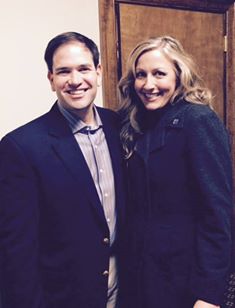
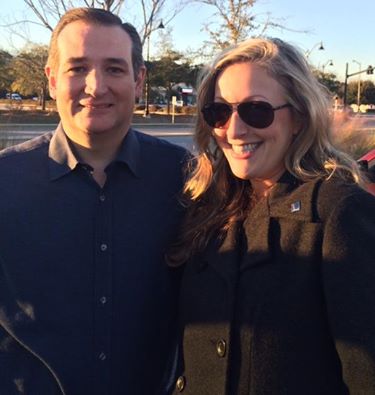
Mr. Paige hired Baker Investigations and Process Servers to serve
the Summons and Amended Complaint on the out-of-state Defendants Cruz and
Rubio during their visit to Charleston SC in advance of their appearances
on the Fox Business News Republican Debate. Owner Elizabeth Baker
personally served both Cruz and Rubio on Wednesday January 13, as they
arrived in Charleston.

Photos courtesy of Baker Investigations and Process Servers.

PaigeSummonsCruz

PaigeSummonsRubio

According to Mr. Paige, Elizabeth Baker described the Rubio campaign folks as very accommodating and congenial while the Cruz folks were willing to
cooperate although they seemed less cordial and Boston lawyers contacted
the Plaintiff attempting to substitute “electronic service” for personal
service required by the Court.

Original complaint:

Ted Cruz Rubio and Jindal eligibility challenged in Vermont, H. Brooke Paige complaint filed December 9, 2015, Natural born citizen status requires US birth and 2 citizen parents, Attorney Mario Apuzzo explains founding fathers intent

Vermont eligibility challenge update January 5, 2016, H. Brooke Paige v State of Vermont, Attorney General’s office failed to inform Secretary of State’s Election Office of their failure to respond in Superior Court

Vermont eligibility challenge update January 5, 2016, H. Brooke Paige v State of Vermont, Attorney General’s office failed to inform Secretary of State’s Election Office of their failure to respond in Superior Court

“Moore said he’s seen no convincing evidence that Obama is a “natural born citizen” and a lot of evidence that suggests he is not.”…Judge Roy Moore interview by WND

“no Person except a natural born Citizen, or a Citizen of the United States, at the time of the Adoption of this Constitution, shall be eligible to the Office of President . . . .”…US Constitution

“We are being lied to on a scale unimaginable by George Orwell.”…Citizen Wells


Just in from Mr. H. Brooke Paige, plaintiff in the complaint against the State of Vermont, Secretary of State James Condos and Attorney General William Sorrell.

“Well this was an unexpected turn of events.  As a result of their
negligence in Answering or otherwise entering an appearance in Superior
Court, a series of events are unfolding that could result in profound
changes in the Vermont Primary this March.  What those changes will be is
difficult to predict. There are structural and legal problems with Vermont
Election Laws (Title 17) which has been thrown together “piecemeal” over
the years and this case should focus attention on the shortcomings of the
current law.

Mr. Paige visited the Secretary of State’s Office today to hand deliver a
copy of the latest filings that requested a Temporary Restraining Order to
prevent the “publication and distribution” of the Presidential Primary
Ballots until the “troubles” complained in the Plaintiff’s pleadings are
resolved or an accommodation can be found that would avoid injuring or
disenfranchising the various candidates.

Sadly, the Attorney General’s office has failed to inform the Secretary of
State’s Election Office of their failure to respond in Superior Court. The
Director of Elections appeared “shell shocked” as Mr. Paige filled him in
on the case, the default and the resolution he intends to propose to the
Court relating to the Primary.  The General Election and the “natural-born
Citizen” question will require additional consideration in order to find
an equable resolution which hopefully will include defining “nbC”
precisely as part of the ruling (rather than mere dicta unrelated to the
resolution).

Mr. Paige informs that the gross negligence of the Defendants exhibited by
their failure to respond reduces the A/G opportunities to stall and
“sidetrack” the case.  The expedited resolution of the questions relating
to the Primary could produce an interesting civics lesson for Vermont
voters.

CitizenWells  will continue to follow this case and provide all the
details here as they become available !”

The complaint:

https://citizenwells.com/2015/12/30/ted-cruz-rubio-and-jindal-eligibility-challenged-in-vermont-h-brooke-paige-complaint-filed-december-9-2015-natural-born-citizen-status-requires-us-birth-and-2-citizen-parents-attorney-mario-apuzz/