Category Archives: Deficit

House Republicans propose $2.5 Trillion in Spending Cuts, Spending Reduction Act of 2011, GOP promises to slash the federal budget

House Republicans propose $2.5 Trillion in Spending Cuts, Spending Reduction Act of 2011, GOP promises to slash the federal budget

From US News January 20, 2011.

“Moving aggressively to make good on election promises to slash the federal budget, the House GOP today unveiled an eye-popping plan to eliminate $2.5 trillion in spending over the next 10 years. Gone would be Amtrak subsidies, fat checks to the Legal Services Corporation and National Endowment for the Arts, and some $900 million to run President Obama’s healthcare reform program. [See a gallery of political caricatures.]

 
What’s more, the “Spending Reduction Act of 2011” proposed by members of the conservative Republican Study Committee, chaired by Ohio Rep. Jim Jordan, would reduce current spending for non-defense, non-homeland security and non-veterans programs to 2008 levels, eliminate federal control of Fannie Mae and Freddie Mac, cut the federal workforce by 15 percent through attrition, and cut some $80 billion by blocking implementation of Obamacare. [See a slide show of the top Congressional travel destinations.]

Some of the proposed reductions will surely draw Democratic attack, such as cutting the Ready to Learn TV Program, repeal of the Davis-Bacon Act, the elimination of the Energy Star Program, and cutting subsidies to the Woodrow Wilson Center. [See editorial cartoons about the GOP.]

Here is the overview provided by the Republican Study Committee:

FY 2011 CR Amendment: Replace the spending levels in the FY 2011 continuing resolution (CR) with non-defense, non-homeland security, non-veterans spending at FY 2008 levels. The legislation will further prohibit any FY 2011 funding from being used to carry out any provision of the Democrat government takeover of health care, or to defend the health care law against any lawsuit challenging any provision of the act. $80 billion savings.

Discretionary Spending Limit, FY 2012-2021: Eliminate automatic increases for inflation from CBO baseline projections for future discretionary appropriations. Further, impose discretionary spending limits through 2021 at 2006 levels on the non-defense portion of the discretionary budget. $2.29 trillion savings over ten years.

Federal Workforce Reforms: Eliminate automatic pay increases for civilian federal workers for five years. Additionally, cut the civilian workforce by a total of 15 percent through attrition. Allow the hiring of only one new worker for every two workers who leave federal employment until the reduction target has been met. (Savings included in above discretionary savings figure).

“Stimulus” Repeal: Eliminate all remaining “stimulus” funding. $45 billion total savings.

Eliminate federal control of Fannie Mae and Freddie Mac. $30 billion total savings.

Repeal the Medicaid FMAP increase in the “State Bailout” (Senate amendments to S. 1586). $16.1 billion total savings.

More than 100 specific program eliminations and spending reductions listed below: $330 billion savings over ten years (included in above discretionary savings figure).”

Read more:

http://www.usnews.com/news/washington-whispers/articles/2011/01/20/house-gop-lists-25-trillion-in-spending-cuts

Jobless claims report May 27 2010, US Labor Dept, Initial claims 460000, Decrease of 14000, This is good news?

Jobless claims report May 27 2010, US Labor Dept, Initial claims 460000, Decrease of 14000

This is good news?

From the US Department of Labor May 27, 2010.

“UNEMPLOYMENT INSURANCE WEEKLY CLAIMS REPORT

          SEASONALLY ADJUSTED DATA

In the week ending May 22, the advance figure for seasonally adjusted initial claims was 460,000, a decrease of 14,000 from the previous week’s revised figure of 474,000. The 4-week moving average was 456,500, an increase of 2,250 from the previous week’s revised average of 454,250.

The advance seasonally adjusted insured unemployment rate was 3.6 percent for the week ending May 15, unchanged from the prior week’s unrevised rate of 3.6 percent.

The advance number for seasonally adjusted insured unemployment during the week ending May 15 was 4,607,000, a decrease of 49,000 from the preceding week’s revised level of 4,656,000. The 4-week moving average was 4,637,250, a decrease of 11,500 from the preceding week’s revised average of 4,648,750.

The fiscal year-to-date average of seasonally adjusted weekly insured unemployment, which corresponds to the appropriated AWIU trigger, was 5.134 million. 

UNADJUSTED DATA

The advance number of actual initial claims under state programs, unadjusted, totaled 404,325 in the week ending May 22, a decrease of 5,765 from the previous week. There were 538,311 initial claims in the comparable week in 2009.

The advance unadjusted insured unemployment rate was 3.4 percent during the week ending May 15, a decrease of 0.1 percentage point from the prior week. The advance unadjusted number for persons claiming UI benefits in state programs totaled 4,381,421, a decrease of 88,300 from the preceding week. A year earlier, the rate was 4.6 percent and the volume was 6,153,284.
Extended benefits were available in Alabama, Alaska, Arizona, California, Colorado, Connecticut, Delaware, the District of Columbia, Florida, Georgia, Idaho, Illinois, Indiana, Kansas, Kentucky, Maine, Massachusetts, Michigan, Minnesota, Missouri, Montana, Nevada, New Hampshire, New Jersey, New Mexico, New York, North Carolina, Ohio, Oregon, Pennsylvania, Puerto Rico, Rhode Island, South Carolina, Tennessee, Texas, Vermont, Virginia, Washington, West Virginia, and Wisconsin during the week ending May 8.

Initial claims for UI benefits by former Federal civilian employees totaled 1,481 in the week ending May 15, an increase of 163 from the prior week. There were 2,369 initial claims by newly discharged veterans, a decrease of 120 from the preceding week.

There were 17,937 former Federal civilian employees claiming UI benefits for the week ending May 8, an increase of 577 from the previous week. Newly discharged veterans claiming benefits totaled 36,370, an increase of 1,365 from the prior week.

States reported 5,059,843 persons claiming EUC (Emergency Unemployment Compensation) benefits for the week ending May 8, a decrease of 41,403 from the prior week. There were 2,185,863 claimants in the comparable week in 2009. EUC weekly claims include first, second, third, and fourth tier activity.

The highest insured unemployment rates in the week ending May 8 were in Puerto Rico (6.2 percent), Alaska (5.9), Oregon (5.4), Nevada (4.9), California (4.8), Pennsylvania (4.7), Wisconsin (4.5), North Carolina (4.4), Montana (4.3), and Connecticut (4.2).

The largest increases in initial claims for the week ending May 15 were in Tennessee (+3,041), Missouri (+2,369), Mississippi (+1,697), Illinois (+1,154), and Arkansas (+851), while the largest decreases were in California (-2,161), Michigan (-2,133), Washington (-1,968), Florida (-1,480), and Oregon (-1,200).”

Read more:

 http://www.dol.gov/opa/media/press/eta/ui/current.htm

US economy slowdown, Economy cooling, Financial markets, Corporate forecasts, Soft retail sales, Rise in jobless claims

US economy slowdown, Economy cooling, Financial markets, Corporate forecasts

From Daily Finance May 22, 2010.

“Forget Europe: Signs of a Slowdown in the U.S.”
“Financial markets around the world are fixated on Europe as it grapples with its debt woes. Though probably overdone, investor paranoia is understandable. The fallout for the global economy would be massive if things spiraled out of control, unlikely as that may seem for the moment.

While potentially catastrophic developments overseas may be captivating, investors would do well to stay focused on more subtle developments in the U.S. Much of Wall Street remains bullish on the prospects of an economic recovery, but some signs suggest that a slowdown may be materializing nonetheless.

Watch Corporate Guidance and Economic Indicators

Hosted software provider Salesforce.com (CRM) is the latest company to report strong results for the first quarter but provide a forecast that couldn’t live up to Wall Street’s expectations. On Thursday, the company said it expected earnings per share of between $1.13 and $1.15 for the full year. That was well below the $1.28 analysts had forecast, and shares tumbled in trading after hours.

The results from Salesforce.com mirror those of networking giant Cisco (CSCO) last week. While Cisco delivered a strong first quarter, shares were initially hammered based on a lackluster outlook for the rest of the year. Hardware giant Dell (DELL) also came under fire as concerns about its ability to maintain profits grew despite solid results for the first quarter.

A slew of retailers including Lowe’s (LOW), Home Depot (HD) and Wal-Mart (WMT) have also provided skimpy guidance for the rest of the year. And while companies may well be trying to game Wall Street by setting the bar low only to dazzle later, recent economic data suggests that the economy could also be slowing after a sharp rebound in demand from depressed lows.

A set of closely watched indicators released Thursday by the Conference Board showed that the economy may be cooling as it heads into the second half of the year. Those findings echo leading indicators monitored by the Economic Cycle Research Institute, which noted that “the pace of improvement in the overall economy is set to slacken in the months ahead” as measures fell to a 40-week low.

Soft retail sales and a sudden rise in jobless claims have contributed to the darkening picture.”

Read more:

http://www.dailyfinance.com/story/investing/forget-europe-signs-of-a-slowdown-in-the-u-s/19487132/

Stocks dive, Futures dive, Jobless claims up, Unemployment Debt Foreign Economies, This ain’t rocket science

Stocks dive, Futures dive, Jobless claims up, Unemployment Debt Foreign Economies

From the Chicago Tribune May 20, 2010.

“Stocks take hard tumble
376-point drop puts major indexes at a loss for year”

“The stock market had its worst day in more than year Thursday, with the Dow industrials tumbling more than 376 points, as fear intensified that a debt crisis in Europe could jeopardize the global economic recovery.

The sell-off put the major U.S. stock indexes, including the Dow, in the red for the year and down more than 10 percent in less than four weeks, the market’s sharpest retreat since March 2009, when prices bottomed at 12-year lows.

Analysts said there was no dramatic news to explain the day’s declines, including the largest one-day point drop in the Dow since February 2009. And despite the fiscal problems of Greece and other European countries, most forecasters predict the U.S. economy will continue the moderate recovery it began last year.

But mixed signals coming from across the Atlantic about the ability and willingness of leaders there to manage the crisis has made U.S. investors anxious.

As a result, volatility in the stock market has increased sharply of late. Thursday’s drop was the 13th time in the last 18 sessions that the Dow has had a triple-digit move.”

“The crash appears to have damaged the psyche of some individual investors just as they were beginning to regain confidence in stocks after the deep bear market of 2007-09.

“People are more nervous than they would have been, say, three years ago, with this sort of decline because they’re picturing what they went through in 2008,” said Mark Wilson, a financial planner at the Tarbox Group. “The basic question is: ‘Are we going right back to where we started from? Should we be getting out now in anticipation of going back to those 2008 levels?'”

Wilson said he was cautioning clients not to overreact, pointing out that 10 percent declines, known as corrections, that merely interrupt longer bull markets are normal.

Nonetheless, in the week that began the day of the crash, individual investors pulled $14 billion from mutual funds, the first such net withdrawal since March 2009.”

“The outlook was not helped by two discouraging pieces of news about the American economy.

The Labor Department said initial claims for unemployment benefits unexpectedly rose 25,000 last week, to 471,000. Meanwhile, The Conference Board, a private research group, reported its index of leading economic indicators fell 0.1 percent in April, its first decline since March 2009.”

Read more:

http://www.chicagotribune.com/business/feed/sc-biz-0521-markets–20100520,0,4858776.story?page=1

Bull Market?

I don’t see it.
Glenn Beck has done a good job of covering the US debt situation, our jeopardy of losing our borrowing rating,  out of control spending and the impact it is having on our economy and future generations.

What is happening in the stock market is no mystery. Out of control government spending, anti business, anti jobs growth policies are exacerbating an already gloomy economy and job market. Overlay that with financial crisis in Greece, Europe and pessimism in China and you have a recipe for a stock market retreat.

I do  not have a crystal ball. However, the November elections can do more than saving this country from ruin. Removing many jackasses will restore confidence in financial markets and alllow Congress to control spending and create jobs.

Let’s roll.

Jobless claims, May 13, 2010, US Department of Labor, Seasonally adjusted initial claims decrease 4000, Seasonally adjusted insured unemployment rises 12000, Emergency Unemployment Compensation claims decrease

Jobless claims, May 13, 2010, US Department of Labor

From the US Department of Labor, May 13, 2010.
“UNEMPLOYMENT INSURANCE WEEKLY CLAIMS REPORT

          SEASONALLY ADJUSTED DATA

In the week ending May 8, the advance figure for seasonally adjusted initial claims was 444,000, a decrease of 4,000 from the previous week’s revised figure of 448,000. The 4-week moving average was 450,500, a decrease of 9,000 from the previous week’s revised average of 459,500.

The advance seasonally adjusted insured unemployment rate was 3.6 percent for the week ending May 1, unchanged from the prior week’s unrevised rate of 3.6 percent.

The advance number for seasonally adjusted insured unemployment during the week ending May 1 was 4,627,000, an increase of 12,000 from the preceding week’s revised level of 4,615,000. The 4-week moving average was 4,639,500, a decrease of 14,750 from the preceding week’s revised average of 4,654,250.

The fiscal year-to-date average of seasonally adjusted weekly insured unemployment, which corresponds to the appropriated AWIU trigger, was 5.174 million. 

UNADJUSTED DATA

The advance number of actual initial claims under state programs, unadjusted, totaled 407,267 in the week ending May 8, an increase of 11,132 from the previous week. There were 570,412 initial claims in the comparable week in 2009.

The advance unadjusted insured unemployment rate was 3.5 percent during the week ending May 1, a decrease of 0.1 percentage point from the prior week. The advance unadjusted number for persons claiming UI benefits in state programs totaled 4,515,632, a decrease of 140,708 from the preceding week. A year earlier, the rate was 4.6 percent and the volume was 6,191,149.
Extended benefits were available in Alabama, Alaska, Arizona, California, Colorado, Connecticut, Delaware, the District of Columbia, Georgia, Idaho, Illinois, Indiana, Kansas, Kentucky, Maine, Massachusetts, Michigan, Minnesota, Missouri, Montana, Nevada, New Hampshire, New Jersey, New Mexico, New York, North Carolina, Ohio, Oregon, Pennsylvania, Puerto Rico, Rhode Island, South Carolina, Tennessee, Texas, Vermont, Virginia, Washington, West Virginia, and Wisconsin during the week ending April 24.

Initial claims for UI benefits by former Federal civilian employees totaled 1,300 in the week ending May 1, an increase of 86 from the prior week. There were 2,289 initial claims by newly discharged veterans, a decrease of 97 from the preceding week.

There were 18,944 former Federal civilian employees claiming UI benefits for the week ending April 24, a decrease of 267 from the previous week. Newly discharged veterans claiming benefits totaled 36,699, a decrease of 500 from the prior week.

States reported 5,137,385 persons claiming EUC (Emergency Unemployment Compensation) benefits for the week ending April 24, a decrease of 216,874 from the prior week. There were 2,156,516 claimants in the comparable week in 2009. EUC weekly claims include first, second, third, and fourth tier activity.

The highest insured unemployment rates in the week ending April 24 were in Alaska (6.6 percent), Puerto Rico (6.3), Oregon (5.8), Nevada (5.1), California (4.9), Pennsylvania (4.8), Wisconsin (4.8), Montana (4.7), North Carolina (4.6), Rhode Island (4.6), Connecticut (4.5), and Idaho (4.5).

The largest increases in initial claims for the week ending May 1 were in New York (+4,021), Kentucky (+1,015), Pennsylvania (+773), Illinois (+611), and Tennessee (+609), while the largest decreases were in California (-18,546), Massachusetts (-3,628), Indiana (-3,242), Michigan (-1,748), and Florida
(-1,291).”

 http://www.dol.gov/opa/media/press/eta/ui/current.htm

Budget deficit widens, Largest April deficit ever, $82.7 billion shortfall, Record 19th straight monthly shortfall, Risk of higher interest rates

Budget deficit widens, Largest April deficit ever, $82.7 billion shortfall

From Bloomberg, May 12, 2010.

“Budget Deficit in U.S. Widened to $82.7 Billion in April”

“The U.S. reported a budget deficit for April, the second such shortfall since 1983 for the month that typically sees an increase in income tax payments.

The excess of spending over revenue rose to $82.7 billion last month compared with a $20.9 billion gap in April 2009, the Treasury Department said today in Washington. It was the largest April deficit ever and exceeded the median forecast in a Bloomberg News survey.

April marked a record 19th straight monthly shortfall, highlighting the challenges facing the Obama administration. Deterioration in the government’s balance sheet in coming years raises the risk of higher interest rates even as an improving economy helps generate taxable income.

“We’re not going to see the deficit come down until economy gets healthier,” Gary Thayer, chief macro strategist at Wells Fargo Advisors LLC in St. Louis, said before the report. “We still have some important problems with the economy. There’s still a tendency by policy makers and lawmakers to address the problem with additional spending.”

The government’s April budget deficit compares with a median forecast of $57.9 billion, according to a Bloomberg survey of 30 economists. Projections ranged from deficits of $20 billion to $90 billion.”

“Revenue Declines

Revenue and other income fell 7.9 percent to $245.3 billion in April from $266.2 billion the same month last year, the Treasury said.”

“Spending for the entire government for April jumped 14.2 percent from the same month a year earlier to $328 billion.”
“The Obama administration forecasts a $1.6 trillion budget deficit in the current fiscal year that began Oct. 1. President Barack Obama’s debt commission met April 27, the first of a series of meetings aimed at producing a plan to reduce the deficit.

Administration officials and Democrats in Congress are looking to the commission for recommendations on reducing the federal debt, which is currently projected to reach 90 percent of the economy by 2020. Interest payments are forecast to quadruple to more than $900 billion annually by that year.”

Read more:

http://www.bloomberg.com/apps/news?pid=20601087&sid=agqhhoO8_cS0&pos=3

Unemployed data, Facts, May 8, 2010, Unemployment rate rises to 9.9 %, Employment rises 290,000, Emergency Unemployment Compensation rises 153,786

Unemployed data, Facts, May 8, 2010, Unemployment rate rises to 9.9 %

Three things happened last week that caused me to ponder what is going on with our economy.

The stock market plunged.

Confusing numbers from the government about employment and unemployment were released.

Many colleges were winding down their academic year. With this comes millions of young adults entering the work force part time or full time. What kind of job market will they encounter?

Consider these numbers and data released last week by the Federal Government.

  • Nonfarm payroll employment rose by 290,000 in April.
  • The unemployment rate edged up to 9.9 percent.
  • In April, the number of unemployed persons was 15.3 million.
  • The rate had been 9.7 percent for the first 3 months of this year.
  • The number of long-term unemployed (those jobless for 27 weeks and over) con-tinued to trend up over the month, reaching 6.7 million.
  • In April, 45.9 percent of unemployed persons had been jobless for 27 weeks or more.
  • Among the unemployed, the number of reentrants to the labor force rose by 195,000 over the month.
  • About 2.4 million persons were marginally attached to the labor force in April, compared with 2.1 million a year earlier.
  • They were not counted as unemployed because they had not searched for work in the 4 weeks preceding the survey.
  • Among the marginally attached, there were 1.2 million discouraged workers in April, up by 457,000 from a year earlier.
  • Discouraged workers are persons not currently looking for work because they believe no jobs are available for them.
  • Federal government employment was up in April, reflecting the hiring of 66,000 temporary workers for the decennial census.
  • UNEMPLOYMENT INSURANCE WEEKLY CLAIMS REPORT: In the week ending May 1, the advance figure for seasonally adjusted initial claims was 444,000, a decrease of 7,000 from the previous week’s revised figure of 451,000.
  • States reported 5,354,259 persons claiming EUC (Emergency Unemployment Compensation) benefits for the week ending April 17, an increase of 153,786 from the prior week.


Sources:

http://www.bls.gov/news.release/empsit.nr0.htm

http://www.dol.gov/opa/media/press/eta/ui/current.htm

No wonder the stock market has the jitters.

Tea Party movement, Concerned Americans, Big Government, Obama administration, Obama’s past, Mainstream media lies, Government controlled health care, Democrats, Republicans, Independents

Tea Party movement, Concerned Americans, Big Government, Obama administration

Are you a Democrat, Republican, Independent, Tea partier or just a concerned American?
Well, speaking for myself, a large portion of the commenters on this blog, and I believe, what I refer to as the big center of this country, I and most people are concerned Americans. We want the federal government to do it’s job of protecting the public, adhering to the US Constitution and separation of powers and doing the bidding of the voters. We do not want big government, intrusion on our rights and freedom and ability to earn a living. We do not want the government dictating every aspect of our lives. We do not want government controlled health care rammed down our throats.
The mainstream media is painting a picture of sterotypes attending and supporting Tea Parties across this country. They would have you believe they are Republican, racists, radicals gun toting wackos. Nothing could be farther from the truth. They are mostly Democrats, Republicans, Independents, concerned Americans who are against out of control government. Many, like myself, do not like either party or status quo party politics. A great many people who have these concerns attend Tea Parties or support them. However, many Americans do not align themselves with the Tea Party movement, but do share many of the concerns. Millions of Americans question Obama, his administration, his cronies and his past. Many of these folks are active and retired military and quite a few are high ranking military officers. Despite the best efforts of the MSM and even Fox News to portray anyone questioning Obama and his past as fringe components, the wisdom of the American people and their desire for the truth prevails.
Here are two articles on the Tea Party movement.

“Establishment Terrified by Tea Party Movement”

By Matt Towery

“Whenever I’m in the nation’s capital, it’s always entertaining to see government staff, aides, lobbyists and elected officials doing their thing. They can make you feel like an outsider — unless, that is, you were there when Ronald Reagan was sworn in, doing then as they are doing now. Then you realize that they’re just younger versions of yourself.
With age and experience comes a trace of wisdom. In talking to various Washington insiders over the last few days, I’ve noticed a predominant theme: The GOP establishment hasn’t a clue how to manage the so-called Tea Party movement. And the Democrats are equally clueless as they try to profile and pigeonhole these new activists.
I’ve been closely watching Tea Partiers since about this time last year. I noticed early on that establishment Republican elected officials have been letting the Tea Party march right on past. These officeholders are afraid they’ll be seen as radical if they associate with the protest movement.
Conventional Washington wisdom seems to have it that moderate, swing voters in the fall general elections will turn away from the GOP if the party ends up with nominees for Congress who are either self-identified as Tea Partiers or are somehow associated with them.”

“The Democrats are even more in the dark. They have persuaded themselves that the Tea Party crowd is one and the same with the so-called “birthers,” who believe President Obama was not born in the United States and should not be eligible to serve as president. The Democrats welcome the Tea Party because they believe it will divide the GOP and bring to the fore weaker and less experienced Republican candidates in November. Either that, they believe, or it will cause a big chunk of disenchanted Republican voters — either establishment or Tea Party — to sit out this year’s general election altogether.”

“I keep reading media reports that try to portray some Tea Partiers as racist. They keep insisting that alleged racial slurs were hurled at certain members of Congress when the health care bill was being considered. Much media, like many Beltway insiders, are characterizing as a racist-inspired fringe element what is in fact a loud manifestation of anger and fear over taxes, government growth, and possible abridgements of future liberty and security.
I don’t buy it. The Tea Party may or may not be substantial enough to transform the GOP into a more conservative party. But my polling tells this: We are likely to see Republican primaries this year that will be contested as never before. And that means there could be an avalanche of Americans voting Republican in November.
The Tea Party effort is both symbolic and a catalyst. It will end up spurring a rush of voter intensity the GOP hasn’t seen since 1994. Oh, yes, I liked this town a lot in those days.”

Read more:

http://www.gopusa.com/commentary/mtowery/2010/mt_04151.shtml
 

“Alinsky’s Avenging Angels: Tea Party Saboteurs

By Michelle Malkin

“One of the popular signs spotted at Tea Party protests across the country over the past year goes like this: “It doesn’t matter what this sign says. You’ll call it racism, anyway!” It’s a pithy, perfect rejoinder to the fusillade of attacks that limited-government activists have weathered from their Democratic detractors and a hostile national media. Committed Alinsky-ites never let reality get in the way of a good Tea Party-bashing narrative.
The radical acolytes of Chicago’s late left-wing organizer Saul Alinsky also understand the importance of manufacturing demons. “Before men can act,” Alinsky preached, “an issue must be polarized. Men will act when they are convinced their cause is 100 percent on the side of the angels, and that the opposition are 100 percent on the side of the devil.” This explains the left’s relentless campaign to sabotage the anti-tax, anti-bailout movement from Day One.
President Obama’s community organizing allies whispered “racist,” “fascist” and “fringe” in the earliest days of the stimulus demonstrations in January and February 2009, when hundreds of first-time protesters turned out on the streets in Washington State, Colorado, Arizona and Kansas. The whispers turned to hysterical screams as hundreds became thousands and thousands became millions of peaceful marchers who gathered for the first nationwide Tax Day Tea Party. Some fringe, huh?
The latest effort to smear Tea Partiers involves self-appointed agents provocateurs who are organizing a “Crash the Tea Party” campaign to discredit the April 15 Tax Day Tea Party by making up bogus racist signs and providing false portrayals of grassroots activists to the press. An online punk, Jason Levin, is spearheading the infiltration effort to “act on behalf of the Tea Party in ways which exaggerate their least appealing qualities” and “damage the public’s opinion of them.” Never mind that public opinion polls now show that the majority of Americans stand with the core principles of fiscal responsibility espoused by Tea Party activists.”

“Fast-forward to April 2010. Alinsky’s avenging angels have declared open warfare on April 15. Will they be enabled again by “mainstream journalists” who have turned their Tea Party reporting assignments into search-and-destroy missions? The signs point to yes.”

Read more:

http://www.gopusa.com/commentary/mmalkin/2010/mm_04141.shtml

Greensboro, NC Tax Day Tea Party, April 15, 2010, Romanian immigrant speech, US citizen, Small business owner, Speech about government control and liberty, North Carolina Tea Parties

Greensboro, NC Tax Day Tea Party, April 15, 2010, Romanian immigrant speech

A Romanian immigrant, US citizen, small business owner, speaks about government control and liberty.

Greensboro NC, Tax Day Tea Party, April 15, 2010, Governmental Square, First photos, Youtube video

Greensboro NC, Tax Day Tea Party, April 15, 2010

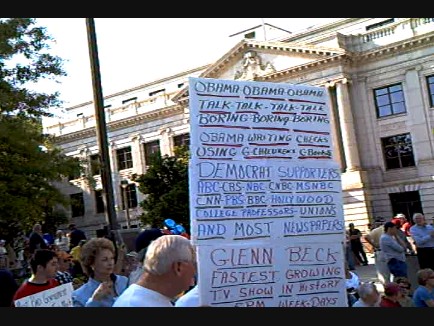
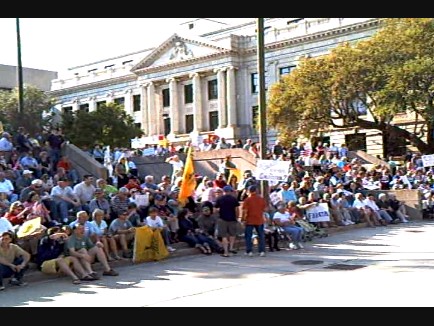
Here are some of the first photos from the Greensboro, NC  Tax Day Tea Party, April 15, 2010. The Tea Party is still going strong as I write this. There was a large enthusiastic crowd. The last photo below is of a Romanian immigrant who is now a US Citizen and small business owner. Her speech was inspiring and will be presented in a Youtube video soon.