Category Archives: Supreme Court

Texas v Pennsylvania et al US Supreme Court states must respond by 3 PM Dec 10, Allen West: LA AL AR FL KY MS SC SD likely to join, Sekulow explains

Texas v Pennsylvania et al US Supreme Court states must respond by 3 PM Dec 10, Allen West: LA AL AR FL KY MS SC SD likely to join, Sekulow explains

“We discovered that these systems are subject to different types of unauthorized manipulation and potential fraud,”  “There is a reason that Texas rejected it,”...Texas Attorney General Ken Paxton

“Trump’s not gonna win. I made f*cking sure of that!”...Eric Coomer, executive with Dominion Voting Systems

” This must be about stopping Trump”…Gabriel Sterling , GA election official


From the US Supreme Court.

Dec 07 2020 Motion for leave to file a bill of complaint filed.
Motion for Leave to File a Bill of ComplaintCertificate of Word CountProof of Service
Dec 07 2020 Motion to expedite filed by plaintiff Texas.
Main Document
Dec 07 2020 Motion for preliminary injunction and temporary restraining order or, alternatively, for stay and administrative stay filed by plaintiff Texas.
Main DocumentProof of ServiceOther
Dec 08 2020 Response to the motion for leave to file a bill of complaint and to the motion for a preliminary injunction and temporary restraining order or, alternatively, for stay and administrative stay requested, due Thursday, December 10, by 3 pm.

https://www.supremecourt.gov/search.aspx?filename=/docket/docketfiles/html/public/22o155.html

From 

STATE OF TEXAS,
Plaintiff,
v.
COMMONWEALTH OF PENNSYLVANIA, STATE OF
GEORGIA, STATE OF MICHIGAN, AND STATE OF
WISCONSIN

“MOTION FOR PRELIMINARY INJUNCTION
AND TEMPORARY RESTRAINING ORDER OR,
ALTERNATIVELY, FOR STAY AND
ADMINISTRATIVE STAY”

“CONCLUSION
This Court should first administratively stay or
temporarily restrain the Defendant States from
voting in the electoral college until further order of
this Court and then issue a preliminary injunction or
stay against their doing so until the conclusion of this
case on the merits. Alternatively, the Court should
reach the merits, vacate the Defendant States’ elector
certifications from the unconstitutional 2020 election
results, and remand to the Defendant States’
legislatures pursuant to 3 U.S.C. § 2 to appoint
electors.
December 7, 2020 Respectfully submitted,
Ken Paxton*
Attorney General of Texas”

https://www.supremecourt.gov/DocketPDF/22/22O155/163052/20201208133328638_TX-v-State-MPI-2020-12-07%20FINAL.pdf

Attorney Jordan Sekulow explains.


Landry: Louisiana Is Joining Texas’ 2020 Election Lawsuit

“Millions of Louisiana citizens, and tens of millions of our fellow citizens in the country, have deep concerns regarding the conduct of the 2020 federal elections. Deeply rooted in these concerns is the fact that some states appear to have conducted their elections with a disregard to the U.S. Constitution. Furthermore, many Louisianans have become more frustrated as some in media and the political class try to sidestep legitimate issues for the sake of expediency.

Weeks ago, on behalf of the citizens of Louisiana, my office joined many other states in filing a legal brief with the United States Supreme Court urging the Justices to look into the conduct of the election in Pennsylvania where their state court ignored the U.S. Constitution in regard to the conduct of the election. The U.S. Constitution in Article 1, Section 4, states plainly: “The Times, Places and Manner of holding Elections for Senators and Representatives, shall be prescribed in each State by the Legislature …” The power for the conduct of federal elections is held by the State Legislatures in each state. In states like Pennsylvania, the judicial branch attempted to seize control of these duties and obligations and to set their own rules. These actions appear to be unconstitutional. If it is unconstitutional for Pennsylvania to take this action, it is similarly unconstitutional for other states to have done the same.

Only the U.S. Supreme Court can ultimately decide cases of real controversy among the states under our Constitution. That is why the Justices should hear and decide the case which we have joined representing the citizens of Louisiana.

Furthermore, the U.S. Supreme Court should consider the most recent Texas motion, which contains some of the same arguments.

Louisiana citizens are damaged if elections in other states were conducted outside the confines of the Constitution while we obeyed the rules.”

https://thehayride.com/2020/12/landry-louisiana-is-joining-texas-2020-election-lawsuit/


More here:

https://citizenwells.com/

http://citizenwells.net/


Judge Alito orders all PA county boards “all ballots received by mail after 8:00 p.m. on November 3 be segregated… separate from other voted ballots” 

Judge Alito orders all PA county boards “all ballots received by mail after 8:00 p.m. on November 3 be segregated… separate from other voted ballots”

“An U.S. Postal Service Insider told Project Veritas founder and CEO James O’Keefe his supervisor instructed mail carriers at his work site here that all new ballot envelopes should be segregated in bins, so that postal clerks could fraudulently hand-postmark them as received Nov. 3.”…Project Veritas

“Judicial Watch Finds Millions of ‘Extra’ Registrants on Voting Rolls – Warns California, Pennsylvania, North Carolina, Colorado, Virginia to Clean Up Voting Rolls or Face a Federal Lawsuit”…Jan 2, 2020

“This election is far from over.”…Citizen Wells


Supreme Court of the United States
No. 20A84
REPUBLICAN PARTY OF PENNSYLVANIA,
Applicant
v.
KATHY BOOCKVAR, SECRETARY OF PENNSYLVANIA, ET AL.
O R D E R
All county boards of election are hereby ordered, pending further order
of the Court, to comply with the following guidance provided by the Secretary
of the Commonwealth on October 28 and November 1, namely, (1) that all
ballots received by mail after 8:00 p.m. on November 3 be segregated and
kept “in a secure, safe and sealed container separate from other voted
ballots,” and (2) that all such ballots, if counted, be counted separately. Pa.
Dep’t of State, Pennsylvania Guidance for Mail-in and Absentee Ballots
Received From the United States Postal Service After 8:00 p.m. on Tuesday,
November 3, 2020 (Oct. 28, 2020); Pa. Dep’t of State, Canvassing Segregated
Mail-in and Civilian Absentee Ballots Received by Mail After 8:00 p.m. on
Tuesday, November 3, 2020 and Before 5:00 p.m. on Friday, November 6, 2020
(Nov. 1, 2020). Until today, this Court was not informed that the guidance
issued on October 28, which had an important bearing on the question
whether to order special treatment of the ballots in question, had been modified. The application received today also informs the Court that neither
the applicant nor the Secretary has been able to verify that all boards are
complying with the Secretary’s guidance, which, it is alleged, is not legally
binding on them.
I am immediately referring this application to the Conference and
direct that any response be filed as soon as possible but in any event no later
than 2 p.m. tomorrow, November 7, 2020.

/s/ Samuel A. Alito, Jr.
Associate Justice of the Supreme
Court of the United States

Dated this 6th
day of November 2020.”

https://www.supremecourt.gov/orders/courtorders/110620zr_g31i.pdf


More here:

https://citizenwells.com/

http://citizenwells.net/


Judge Amy Coney Barrett opening statement Supreme Court nomination hearings October 12, 2020, Released Sunday

Judge Amy Coney Barrett opening statement Supreme Court nomination hearings October 12, 2020, Released Sunday

“I made it absolutely clear that I would go forward with a confirmation process as [Senate Judiciary] chairman, even a few months before a presidential election, if the nominee were chosen with the advice, and not merely the consent, of the Senate, just as the Constitution requires,” ..Joe Biden, Georgetown Law School 2016

“When there is a vacancy on the SCOTUS, the President is to nominate someone, the Senate is to consider that nomination … There’s no unwritten law that says that it can only be done on off-years. That’s not in the Constitution text.”...Barack Obama 2016

“Even if President Trump wants to put forward a name now, the Senate should not act until after the American people select their next president, their next Congress, their next Senate,”...Joe Biden 2020 


“Chairman [Lindsey] Graham, Ranking Member [Dianne] Feinstein, and Members of the Committee: I am honored and humbled to appear before you as a nominee for Associate Justice of the Supreme Court.

I thank the President for entrusting me with this profound responsibility, as well as for the graciousness that he and the First Lady have shown my family throughout this process.

I thank the Members of this Committee—and your other colleagues in the Senate—who have taken the time to meet with me since my nomination. It has been a privilege to meet you.

As I said when I was nominated to serve as a Justice, I am used to being in a group of nine—my family. Nothing is more important to me, and I am so proud to have them behind me.

My husband Jesse and I have been married for 21 years. He has been a selfless and wonderful partner at every step along the way. I once asked my sister, “Why do people say marriage is hard? I think it’s easy.” She said, “Maybe you should ask Jesse if he agrees.” I decided not to take her advice. I know that I am far luckier in love than I deserve.

Jesse and I are parents to seven wonderful children. Emma is a sophomore in college who just might follow her parents into a career in the law. Vivian came to us from Haiti. When she arrived, she was so weak that we were told she might never walk or talk normally. She now deadlifts as much as the male athletes at our gym, and I assure you that she has no trouble talking. Tess is 16, and while she shares her parents’ love for the liberal arts, she also has a math gene that seems to have skipped her parents’ generation. John Peter joined us shortly after the devastating earthquake in Haiti, and Jesse, who brought him home, still describes the shock on JP’s face when he got off the plane in wintertime Chicago. Once that shock wore off, JP assumed the happy-go-lucky attitude that is still his signature trait. Liam is smart, strong, and kind, and to our delight, he still loves watching movies with Mom and Dad. Ten-year-old Juliet is already pursuing her goal of becoming an author by writing multiple essays and short stories, including one she recently submitted for publication. And our youngest—Benjamin, who has Down Syndrome—is the unanimous favorite of the family.

My own siblings are here, some in the hearing room and some nearby. Carrie, Megan, Eileen, Amanda, Vivian, and Michael are my oldest and dearest friends. We’ve seen each other through both the happy and hard parts of life, and I am so grateful that they are with me now.

My parents, Mike and Linda Coney, are watching from their New Orleans home. My father was a lawyer and my mother was a teacher, which explains how I ended up as a law professor. More important, my parents modeled for me and my six siblings a life of service, principle, faith, and love. I remember preparing for a grade-school spelling bee against a boy in my class. To boost my confidence, Dad sang, “Anything boys can do, girls can do better.” At least as I remember it, I spelled my way to victory.

I received similar encouragement from the devoted teachers at St. Mary’s Dominican, my all-girls high school in New Orleans. When I went to college, it never occurred to me that anyone would consider girls to be less capable than boys. My freshman year, I took a literature class filled with upperclassmen English majors. When I did my first presentation—on Breakfast at Tiffany’s—I feared I had failed. But my professor filled me with confidence, became a mentor, and—when I graduated with a degree in English—gave me Truman Capote’s collected works.

Although I considered graduate studies in English, I decided my passion for words was better suited to deciphering statutes than novels. I was fortunate to have wonderful legal mentors—in particular, the judges for whom I clerked. The legendary Judge Laurence Silberman of the D.C. Circuit gave me my first job in the law and continues to teach me today. He was by my side during my Seventh Circuit hearing and investiture, and he is cheering me on from his living room now.

I also clerked for Justice Scalia, and like many law students, I felt like I knew the justice before I ever met him, because I had read so many of his colorful, accessible opinions. More than the style of his writing, though, it was the content of Justice Scalia’s reasoning that shaped me. His judicial philosophy was straightforward: A judge must apply the law as written, not as the judge wishes it were. Sometimes that approach meant reaching results that he did not like. But as he put it in one of his best known opinions, that is what it means to say we have a government of laws, not of men.

Justice Scalia taught me more than just law. He was devoted to his family, resolute in his beliefs, and fearless of criticism. And as I embarked on my own legal career, I resolved to maintain that same perspective. There is a tendency in our profession to treat the practice of law as all-consuming, while losing sight of everything else. But that makes for a shallow and unfulfilling life. I worked hard as a lawyer and a professor; I owed that to my clients, my students, and myself. But I never let the law define my identity or crowd out the rest of my life.

A similar principle applies to the role of courts. Courts have a vital responsibility to enforce the rule of law, which is critical to a free society. But courts are not designed to solve every problem or right every wrong in our public life. The policy decisions and value judgments of government must be made by the political branches elected by and accountable to the People. The public should not expect courts to do so, and courts should not try.

That is the approach I have strived to follow as a judge on the Seventh Circuit. In every case, I have carefully considered the arguments presented by the parties, discussed the issues with my colleagues on the court, and done my utmost to reach the result required by the law, whatever my own preferences might be. I try to remain mindful that, while my court decides thousands of cases a year, each case is the most important one to the parties involved. After all, cases are not like statutes, which are often named for their authors. Cases are named for the parties who stand to gain or lose in the real world, often through their liberty or livelihood.

When I write an opinion resolving a case, I read every word from the perspective of the losing party. I ask myself how would I view the decision if one of my children was the party I was ruling against: Even though I would not like the result, would I understand that the decision was fairly reasoned and grounded in the law? That is the standard I set for myself in every case, and it is the standard I will follow as long as I am a judge on any court.

When the President offered this nomination, I was deeply honored. But it was not a position I had sought out, and I thought carefully before accepting. The confirmation process—and the work of serving on the Court if I am confirmed— requires sacrifices, particularly from my family. I chose to accept the nomination because I believe deeply in the rule of law and the place of the Supreme Court in our Nation. I believe Americans of all backgrounds deserve an independent Supreme Court that interprets our Constitution and laws as they are written. And I believe I can serve my country by playing that role.

I come before this Committee with humility about the responsibility I have been asked to undertake, and with appreciation for those who came before me. I was nine years old when Sandra Day O’Connor became the first woman to sit in this seat. She was a model of grace and dignity throughout her distinguished tenure on the Court. When I was 21 years old and just beginning my career, Ruth Bader Ginsburg sat in this seat. She told the Committee, “What has become of me could only happen in America.” I have been nominated to fill Justice Ginsburg’s seat, but no one will ever take her place. I will be forever grateful for the path she marked and the life she led.

If confirmed, it would be the honor of a lifetime to serve alongside the Chief Justice and seven Associate Justices. I admire them all and would consider each a valued colleague. And I might bring a few new perspectives to the bench. As the President noted when he announced my nomination, I would be the first mother of school-age children to serve on the Court. I would be the first Justice to join the Court from the Seventh Circuit in 45 years. And I would be the only sitting Justice who didn’t attend law school at Harvard or Yale. I am confident that Notre Dame will hold its own, and maybe I could even teach them a thing or two about football.

As a final note, Mr. Chairman, I would like to thank the many Americans from all walks of life who have reached out with messages of support over the course of my nomination. I believe in the power of prayer, and it has been uplifting to hear that so many people are praying for me. I look forward to answering the Committee’s questions over the coming days. And if I am fortunate enough to be confirmed, I pledge to faithfully and impartially discharge my duties to the American people as an Associate Justice of the Supreme Court. Thank you.”

https://www.politico.com/news/2020/10/11/amy-coney-barrett-opening-statement-supreme-court-428635


 

More here:

https://citizenwells.com/

http://citizenwells.net/


Amy Coney Barrett President Trump pick for SCOTUS, Judge U.S. Court of Appeals for the Seventh Circuit, Clerked for Justice Antonin Scalia

Amy Coney Barrett President Trump pick for SCOTUS, Judge U.S. Court of Appeals for the Seventh Circuit, Clerked for Justice Antonin Scalia

“I made it absolutely clear that I would go forward with a confirmation process as [Senate Judiciary] chairman, even a few months before a presidential election, if the nominee were chosen with the advice, and not merely the consent, of the Senate, just as the Constitution requires,” ..Joe Biden, Georgetown Law School 2016

“When there is a vacancy on the SCOTUS, the President is to nominate someone, the Senate is to consider that nomination … There’s no unwritten law that says that it can only be done on off-years. That’s not in the Constitution text.”...Barack Obama 2016

“Even if President Trump wants to put forward a name now, the Senate should not act until after the American people select their next president, their next Congress, their next Senate,”...Joe Biden 2020 


The NY Times is calling it:

“President Trump has selected Judge Amy Coney Barrett, the favorite candidate of conservatives, to succeed Justice Ruth Bader Ginsburg and will try to force Senate confirmation before Election Day in a move that would significantly alter the ideological makeup of the Supreme Court for years.

Mr. Trump plans to announce on Saturday that she is his choice, according to six people close to the process who asked not to be identified disclosing the decision in advance. As they often do, aides cautioned that Mr. Trump sometimes upends his own plans.

But he is not known to have interviewed any other candidates and came away from two days of meetings with Judge Barrett this week impressed with a jurist he was told would be a female Antonin Scalia, referring to the justice she once clerked for. On Friday night, Judge Barrett was photographed getting out of her car outside her home in South Bend, Ind.

“I haven’t said it was her, but she is outstanding,” Mr. Trump told reporters who asked about Judge Barrett’s imminent nomination at Joint Base Andrews outside Washington after CNN and other news outlets reported on his choice.

https://www.nytimes.com/2020/09/25/us/politics/amy-coney-barrett-supreme-court.html

From The University of Notre Dame Law School.

“The Honorable Amy Coney Barrett was confirmed as a judge on the U.S. Court of Appeals for the Seventh Circuit in October 2017. She is a Notre Dame Law School alumna and has taught as a member of the Law School’s faculty since 2002.

Judge Barrett teaches and researches in the areas of federal courts, constitutional law, and statutory interpretation. Her scholarship in these fields has been published in leading journals, including the Columbia, Virginia, and Texas Law Reviews. From 2010-2016, she served by appointment of the Chief Justice on the Advisory Committee for the Federal Rules of Appellate Procedure. She has been selected as “Distinguished Professor of the Year” by three of the Law School’s graduating classes.

Judge Barrett earned her B.A. in English literature, magna cum laude, from Rhodes College, where she was elected to Phi Beta Kappa and, among other honors, was chosen by the faculty as the most outstanding graduate in the college’s English department. She earned her J.D., summa cum laude, from Notre Dame, where she was a Kiley Fellow, earned the Hoynes Prize, the Law School’s highest honor, and served as executive editor of the Notre Dame Law Review.

Before joining the Notre Dame faculty, Judge Barrett clerked for Judge Laurence H. Silberman of the U.S. Court of Appeals for the D.C. Circuit and for Associate Justice Antonin Scalia of the U.S. Supreme Court. As an associate at Miller, Cassidy, Larroca & Lewin in Washington, D.C., she litigated constitutional, criminal, and commercial cases in both trial and appellate courts. Judge Barrett has served as a visiting associate professor and John M. Olin Fellow in Law at the George Washington University Law School,  as a visiting associate professor of law at the University of Virginia and is a member of the American Law Institute (ALI).”

Read more:

https://law.nd.edu/directory/amy-barrett/

Lawyer and law clerk endorsement letter:

https://law.nd.edu/assets/253073/amybarrettscotus.pdf


More here:

https://citizenwells.com/

http://citizenwells.net/


Ruth Bader Ginsburg dissent right about mandated arbitration, “insulated powerful economic interests from liability”, Thrivent powerful example

Ruth Bader Ginsburg dissent right about mandated arbitration, “insulated powerful economic interests from liability”, Thrivent powerful example

“Thrivent contends that its commitment to individual arbitration is ‘”important to the membership because it reflects Thrivent’s Christian Common Bond, helps preserve members’ fraternal relationships, and avoids protracted and adversarial litigation that could undermine Thrivent’s core mission.’”…Thrivent v. Acosta Nov. 3, 2017

“pre-dispute mandatory arbitration provisions are inappropriate in insurance policies and incompatible with the legal duties insurers owe policyholders when handling their claims.”…NAIC, National Association of Insurance Commissioners, August 15, 2016

“I worked at Thrivent Financial full-time (More than 8 years)”                      “Claims to be based on Christian values but does not adhere to them.”…Former Thrivent employee


I got quite an education at an enormous financial and emotional cost when I filed claims with Thrivent Financial (for Lutherans) on 2 occasions.

They retroactively changed the contract on a disability policy I paid on religiously for 25 years to require mandated dispute resolution including arbitration.

They committed documented fraud on both occasions and demanded that even fraud go to arbitration.

They took away my day in court.

From Citizen Wells July 1, 2018.

“People around me and online may try to put me in a nice neat box such as Republican.

I do not fit.

What I am is an American who adheres to the US Constitution and rule of law.

I am not against arbitration on principle. Mutually agreed to.

I am against forced, mandated arbitration which strips away one of our basic rights.

Our day in court.”

“The Supreme Court on Monday ruled that companies can use arbitration clauses in employment contracts to prohibit workers from banding together to take legal action over workplace issues.

The vote was 5 to 4, with the court’s more conservative justices in the majority. The court’s decision could affect some 25 million employment contracts.”

“Justice Ruth Bader Ginsburg read her dissent from the bench, a sign of profound disagreement. In her written dissent, she called the majority opinion “egregiously wrong.” In her oral statement, she said the upshot of the decision “will be huge under-enforcement of federal and state statutes designed to advance the well being of vulnerable workers.””

““Under those contracts, Justice Ginsburg wrote, it is often not worth it and potentially dangerous to pursue small claims individually. “By joining hands in litigation, workers can spread the costs of litigation and reduce the risk of employer retaliation,” she wrote.

The contracts may also encourage misconduct, Justice Ginsburg wrote.

“Employers, aware that employees will be disinclined to pursue small-value claims when confined to proceeding one-by-one, will no doubt perceive that the cost-benefit balance of underpaying workers tips heavily in favor of skirting legal obligations,” she wrote, adding that billions of dollars in underpaid wages are at issue.”

“In a 2015 dissent, Justice Ginsburg, citing a New York Times article examining arbitration agreements, wrote that the 2011 decision and later ones “have predictably resulted in the deprivation of consumers’ rights to seek redress for losses, and, turning the coin, they have insulated powerful economic interests from liability for violations of consumer protection laws.””

https://citizenwells.com/2018/07/01/us-supreme-court-decision-to-uphold-mandated-arbitration-further-erodes-our-rights-our-day-in-court-deprivation-of-consumers-rights-to-seek-redress-for-losses/

From Citizen Wells March 26, 2019.

“From Insurance Business Magazine.

Clicking “accept” on a company’s terms and conditions – something we do daily to use and pay for products and services – usually subjects us to lengthy contractual agreements, many of which contain mandatory arbitration clauses. Proponents of arbitration might think it’s the greatest thing since whole wheat artisanal sliced bread, but mandating arbitration in consumer contracts is troublesome, and it has no place in insurance policies for individuals and small businesses.”

“However, placing mandatory arbitration clauses in insurance policies restructures this crucial aspect of the insurer-insured relationship. Companies presumably employ pre-dispute mandatory arbitration provisions because they believe arbitration generally benefits them – and a growing amount of research suggests they are right.”

“From the NAIC, The National Association of Insurance Commissioners, August 15, 2016.

“Why arbitration clauses should be banned”

“Insurers that would insist on mandatory arbitration of policyholder disputes have selected the forum that they believe will be more favorable to them than to their policyholders, if not on each individual claim then in the aggregate. However, manipulating the dispute resolution process in this manner conflicts with the duties insurers owe their policyholders and is not holding their policyholders’ interests “at least equal to their own.”

If arbitration was truly a neutral forum rather than one favoring insurers, then there would be no need for an insurer to insist on its use before a dispute has even arisen.”

https://citizenwells.com/2019/03/26/mandated-arbitration-has-no-place-in-insurance-policies-for-individuals-naic-reviewing-mccarran-ferguson-act-allows-states-to-regulate-arbitration-in-insurance-over-federal-arbitration-act-faa/

Arbitration can be a valuable tool. But it should not be mandated.

Justice Ruth Bader Ginsburg  was right.

God bless.


More here:

https://citizenwells.com/

http://citizenwells.net/


Biden 2016: “Under my chairmanship, every Supreme Court nominee was given a hearing and a vote in the Judiciary Committee”, NY times

Biden 2016: “Under my chairmanship, every Supreme Court nominee was given a hearing and a vote in the Judiciary Committee”, NY times


“I made it absolutely clear that I would go forward with a confirmation process as [Senate Judiciary] chairman, even a few months before a presidential election, if the nominee were chosen with the advice, and not merely the consent, of the Senate, just as the Constitution requires,” ..Joe Biden, Georgetown Law School 2016

“When there is a vacancy on the SCOTUS, the President is to nominate someone, the Senate is to consider that nomination … There’s no unwritten law that says that it can only be done on off-years. That’s not in the Constitution text.”...Barack Obama 2016

“Even if President Trump wants to put forward a name now, the Senate should not act until after the American people select their next president, their next Congress, their next Senate,”...Joe Biden 2020 


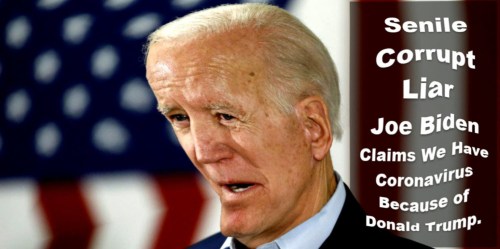
Is this the man you want for our next president?

Corrupt career politician Joe Biden.

A liar and hypocrite.

From The Daily Mail September 20, 2020.

“Former Vice President Joe Biden appealed to Senate Republicans Sunday not to allow President Trump to ‘jam’ through’ a Supreme court pick – and said if he himself wins in November, it should be he who gets to make the selection.

‘This appointment isn’t about the past. It’s about the future. And the people of this nation are choosing their future right now as they vote,’ Biden said in a speech in Philadelphia Sunday.

‘To jam this nomination through the Senate is just an exercise in raw political power, and I don’t believe the people of this nation will stand for it,’ Biden said.”

“‘Even if President Trump wants to put forward a name now, the Senate should not act until after the American people select their next president, their next Congress, their next Senate,’ he added. ”

Read more:

https://www.dailymail.co.uk/news/article-8753323/Joe-Biden-calls-Donald-Trumps-Supreme-Court-nominee-WITHDRAWN-loses.html

From the NY Times March 3, 2016.

“IN my 36-year tenure in the United States Senate — nearly half of it as chairman or ranking Democrat on the Judiciary Committee — I presided or helped preside over nine nominees to the Supreme Court, from both Republican and Democratic presidents. That’s more than anyone else alive today.

In every instance we adhered to the process explicitly laid out in the Constitution: The president has the constitutional duty to nominate; the Senate has the constitutional obligation to provide advice and consent. It is written plainly in the Constitution that both presidents and senators swear an oath to uphold and defend.”

“Under my chairmanship, every Supreme Court nominee was given a hearing and a vote in the Judiciary Committee. And I made sure every nominee was given a full vote on the floor of the Senate, even those whose initial vote in the Judiciary Committee had failed, and even those whom I opposed. Only those who withdrew did not get floor votes. This position earned me the anger of my own party. But I believed strongly that the Constitution, clearly and plainly, calls for all 100 senators to advise and consent on nominees — not just the handful on the Judiciary Committee.”

“I know there is an argument that no nominee should be voted on in the last year of a presidency. But there is nothing in the Constitution — or our history — to support this view. Justice Anthony M. Kennedy was confirmed in the last year of Ronald Reagan’s second term. I know. I was chairman of the Judiciary Committee at the time. And we promptly gave him a hearing, a vote in committee and a full vote on the floor.”

Read more:

https://www.nytimes.com/2016/03/04/opinion/joe-biden-the-senates-duty-to-advise-and-consent.html

USA Memes


More here:

https://citizenwells.com/

http://citizenwells.net/


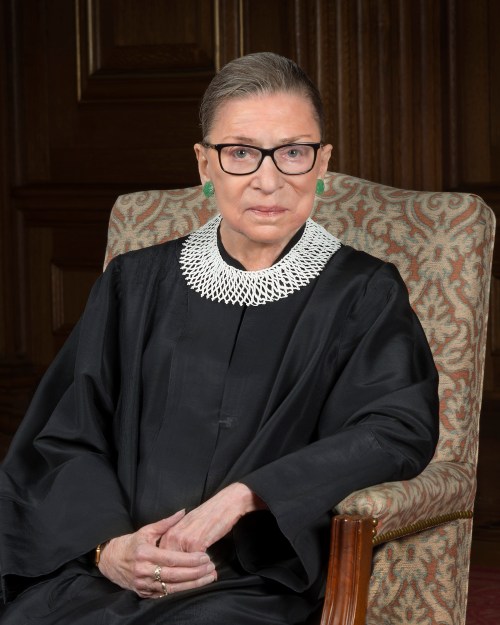
Attorney General Barr on passing of Justice Ruth Bader Ginsburg September 18, 2020, “Her legal ability, personal integrity, and determination were beyond doubt”

Attorney General Barr on passing of Justice Ruth Bader Ginsburg September 18, 2020, “Her legal ability, personal integrity, and determination were beyond doubt”

“In a 2015 dissent, Justice Ginsburg, citing a New York Times article examining arbitration agreements, wrote that the 2011 decision and later ones “have predictably resulted in the deprivation of consumers’ rights to seek redress for losses, and, turning the coin, they have insulated powerful economic interests from liability for violations of consumer protection laws.””...NY Times May 21, 2018

“Having experienced the abuse of mandated arbitration first hand, I agree with Justice Ginsburg. It may be the only time it happens, but injustice is injustice.”...Citizen Wells


From Attorney General William P. Barr September 18, 2020.

“On behalf of the Department of Justice, I extend my deepest sympathy on the passing of Justice Ruth Bader Ginsburg.  Justice Ginsburg led one of the great lives in the history of American law.  She was a brilliant and successful litigator, an admired court of appeals judge, and a profoundly influential Supreme Court Justice.  For all her achievements in those roles, she will perhaps be remembered most for inspiring women in the legal profession and beyond.  She and I did not agree on every issue, but her legal ability, personal integrity, and determination were beyond doubt.  She leaves a towering legacy, and all who seek justice mourn her loss.”

https://www.justice.gov/opa/pr/statement-attorney-general-william-p-barr-passing-justice-ruth-bader-ginsburg


More here:

https://citizenwells.com/

http://citizenwells.net/

Julie Swetnick affidavit appears to be more party girl horse crap, Citizen Wells analysis, Witness to rapes and not call police makes her accessory

Julie Swetnick affidavit appears to be more party girl horse crap, Citizen Wells analysis, Witness to rapes and not call police makes her accessory

“Receptionist: How do you write women so well?
Melvin Udall: I think of a man, and I take away reason and accountability.”…From the movie “As good as it gets”

“Democrat mantra: The end justifies the means.”…Citizen Wells

“We are being lied to on a scale unimaginable by George Orwell.”…Citizen Wells


Julie Swetnick is another party girl with zero credibility.

She claims in her affidavit to have witnessed the rapes of other women.

That makes her a criminal, an accessory to crimes.

Did she mention that when applying for security clearances?

She attended over 10 of these house parties from 1981-83.

If girls were getting raped, why did she keep attending?

She states that she was raped: “I believe I was drugged using Quaaludes or something similar placed in what I was drinking,” so drugged that she could not resist the rape,  yet she remembers Brett Kavanaugh being present and after over 35 years.

She makes value judgements that she would not be qualified to make even if she were sober.

If you can’t see through this charade you are biased or dumber than dirt (or both).

She also states:

“Mark Judge has significant information concerning the conduct of Brett Kavanaugh”

That is correct.

Mark Judge stated: “It’s just absolutely nuts. I never saw Brett act that way,”


More here:

https://citizenwells.com/

http://citizenwells.net/

Christine Blasey Ford high school party girl? Honesty questions, Hitched her wagon to dishonest media and Democrat Party, Glass houses and stone throwing

Christine Blasey Ford high school party girl? Honesty questions, Hitched her wagon to  media and Democrat Party, Glass houses and stone throwing

“people who live in glass houses shouldn’t throw stones”…Old saying

“Democrat mantra: The end justifies the means.”…Citizen Wells

“Nothing can now be believed which is seen in a newspaper.
Truth itself becomes suspicious by being put into that
polluted vehicle.”…. Thomas Jefferson


Christine Blasey Ford has a big problem.

She has been “throwing stones” at Brett Kavanaugh but apparently she “lives in a glass house.”

After reading the Washington Post article about her allegations, a series of red flags were raised and reported here on September 18, 2018.

Let’s begin with the obvious:

  • Ms. Ford was 15 and Mr. Kavanaugh was 17 at the time of the alleged incident.
  • Ms. Ford attended a party without parental supervision.
  • Ms. Ford stated they had both been drinking.
  • According to the Post, she states that she does not remember many key points of the incident. She did not recall how she got there. She does not state how much she drank before arriving.
  • There was no rape.
  • “she told no one at the time what had happened to her.” It seems odd that she told no one, not even a best friend.
  • “This is nothing, it didn’t happen, and he didn’t rape me.”
  • Perhaps she was traumatized. She was 15, drinking, at an unsupervised party. Perhaps she misinterpreted horseplay. Who knows.
  • Memories from events over 30 years ago are not reliable. As are memories “retrieved” under Psychoanalysis.
  • Ms. Ford is a Democrat, the party of the end justifies the means.

https://citizenwells.com/2018/09/18/christine-blasey-ford-allegations-against-brett-kavanaugh-feelings-vs-facts-zero-credibility-scenario-republicans-should-grow-gonads-and-end-this-farce/

The post mentioned that Ford also deleted her social media accounts.

Another red flag, i.e. what was she hiding.

An issue of honesty was emerging.

Christine Blasey Ford was a well educated psychological professional.

From my exposure to Psych 101 and other research I knew that human memories were extremely fallible.

Ms. Ford was educated on this matter and not being honest in her portrayal of “facts.”

From Psychology Today Mar 12, 2012.

“Unreliable Memory

“We tend to think that memories are stored in our brains just as they are in computers. Once registered, the data are put away for safe-keeping and eventual recall. The facts don’t change.

But neuroscientists have shown that each time we remember something, we are reconstructing the event, reassembling it from traces throughout the brain. Psychologists have pointed out that we also suppress memories that are painful or damaging to self-esteem. We could say that, as a result, memory is unreliable. We could also say it is adaptive, reshaping itself to accommodate the new situations we find ourselves facing. Either way, we have to face the fact that it is “flexible.”

For most of us that usually means we recall a rosier past than we actually had, though some of us are tormented by memories of a painful past we can’t shake and that seems to get worse every time we revisit them. But for all of us that means an incomplete past.

Nothing brings this home better than the memories of witnesses in trials, one of the cornerstones of our legal system. All too many people have been put behind bars on the testimony of witnesses, who when challenged by more objective data have been later proved to be misremembering.”

“There is always the danger of Groupthink. But if you encourage disagreements and challenges, you are not only likely to avoid conformity but get better results.”

Read more:

https://www.psychologytoday.com/us/blog/hidden-motives/201203/unreliable-memory

Groupthink, eh? That sounds problematic.

Oops, it appears that Christine Blasey Ford has an even bigger problem.

It appears that her high school yearbooks were scrubbed and retrieved.

From Cult of the 1st Amendment.

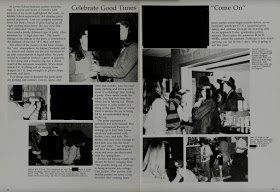
“The resistance media has been singularly focused on Brett Kavanaugh’s high school yearbooks, which imply that he got drunk and threw up. There’s no need to imply anything from the Holton-Arms yearbooks. It’s all there in focus, and the written word too. All of the sordid details as approved for publication by a “look the other way” faculty. And now it’s available for historical/evidentiary review.

It is to this wild Holton culture we must look in order to shed light on the last minute accusation by Christine Blasey. And in the official high school chronicles of this era, we find many names of people who can provide relevant evidence.

Christine “Chrissy” Blasey alleges she cannot recall the exact date, place or names of people who were at the party in question. This research is intended to refresh her recollection and the recollections of others who may recall key facts. (In this report, last names have been redacted and faces obscured, other than the picture of Chrissy Blasey seen below.)

The yearbook title is SCRIBE. The relevant issues are SCRIBE 82, SCRIBE 83 and SCRIBE 84, corresponding to Blaseys’s sophomore, junior and senior years, when she and her classmates (and Kavanaugh) were 15-17 year old juveniles.

While preparing this report, I came across a biased viral article from Heavy.com that portrays Christine Blasey and Holton-Arms as the very essence of high school purity. As for the school itself, when Blasey attended it, nothing could be further from the truth, as you will see below.”

“Lastly one cannot fail to mention the climax of the junior social scene, the party. Striving to extend our educational experience beyond the confines of the classroom, we played such intellectually stimulating games as Quarters, Mexican Dice and everyone’s favorite, Pass-Out, which usually resulted from the aforementioned two.”


“The Halloween party pictured above would have taken place within sixteen weeks of the alleged assault, which Blasey claims happened in the Summer of ’82, after her sophomore year. “

“1982 was a particularly wild year and Scribe 82 published multiple pictures of minors drinking heavily, beer cans stacked up, liquor repeatedly glorified, boys, beer and “the ‘Zoo’ atmosphere”. The caption on the right side of the image mocks the faculty and parents, “Come on, you’re really too young to drink.””

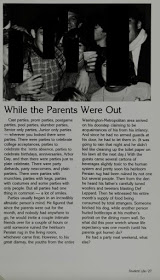
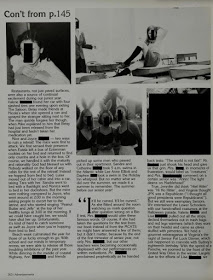
Numerous passages in the yearbooks discuss the drunken keg parties held while parents were away from home:

There is much more & I urge you to read it.

https://cultofthe1st.blogspot.com/2018/09/why-christine-blasey-fords-high-school_19.html?showComment=1537409523569&m=1#c2260053581059665674


More here:

https://citizenwells.com/

http://citizenwells.net/


US Supreme Court decision to uphold mandated arbitration further erodes our rights, Our day in court, “deprivation of consumers’ rights to seek redress for losses”

US Supreme Court decision to uphold mandated arbitration further erodes our rights, Our day in court, “deprivation of consumers’ rights to seek redress for losses”

“The road to hell is paved with good intentions.”…Karl Marx

“Beware of false prophets, which come to you in sheep’s clothing, but inwardly they are ravening wolves.”…Matthew 7:15

“Our right to our day in court has been severely eroded.”…Citizen Wells


People around me and online may try to put me in a nice neat box such as Republican.

I do not fit.

What I am is an American who adheres to the US Constitution and rule of law.

I am not against arbitration on principle. Mutually agreed to.

I am against forced, mandated arbitration which strips away one of our basic rights.

Our day in court.

From the New York Times.

“Supreme Court Upholds Workplace Arbitration Contracts Barring Class Actions

The Supreme Court on Monday ruled that companies can use arbitration clauses in employment contracts to prohibit workers from banding together to take legal action over workplace issues.

The vote was 5 to 4, with the court’s more conservative justices in the majority. The court’s decision could affect some 25 million employment contracts.

Writing for the majority, Justice Neil M. Gorsuch said the court’s conclusion was dictated by a federal law favoring arbitration and the court’s precedents. If workers were allowed to band together to press their claims, he wrote, “the virtues Congress originally saw in arbitration, its speed and simplicity and inexpensiveness, would be shorn away and arbitration would wind up looking like the litigation it was meant to displace.”

Justice Ruth Bader Ginsburg read her dissent from the bench, a sign of profound disagreement. In her written dissent, she called the majority opinion “egregiously wrong.” In her oral statement, she said the upshot of the decision “will be huge under-enforcement of federal and state statutes designed to advance the well being of vulnerable workers.”

Justice Ginsburg called on Congress to address the matter.

Brian T. Fitzpatrick, a law professor at Vanderbilt University who studies arbitrations and class actions, said the ruling was unsurprising in light of earlier Supreme Court decisions. Justice Gorsuch, he added, “appears to have put his cards on the table as firmly in favor of allowing class actions to be stamped out through arbitration agreements.”

As a result, Professor Fitzpatrick said “it is only a matter of time until the most powerful device to hold corporations accountable for their misdeeds is lost altogether.””

“Under those contracts, Justice Ginsburg wrote, it is often not worth it and potentially dangerous to pursue small claims individually. “By joining hands in litigation, workers can spread the costs of litigation and reduce the risk of employer retaliation,” she wrote.

The contracts may also encourage misconduct, Justice Ginsburg wrote.

“Employers, aware that employees will be disinclined to pursue small-value claims when confined to proceeding one-by-one, will no doubt perceive that the cost-benefit balance of underpaying workers tips heavily in favor of skirting legal obligations,” she wrote, adding that billions of dollars in underpaid wages are at issue.

Justice Ginsburg added that requiring individual arbitrations can produce inconsistent results in similar cases, particularly because arbitrations are often confidential.”

“In a 2015 dissent, Justice Ginsburg, citing a New York Times article examining arbitration agreements, wrote that the 2011 decision and later ones “have predictably resulted in the deprivation of consumers’ rights to seek redress for losses, and, turning the coin, they have insulated powerful economic interests from liability for violations of consumer protection laws.””

Read more:

https://www.nytimes.com/2018/05/21/business/supreme-court-upholds-workplace-arbitration-contracts.html

Having experienced the abuse of mandated arbitration first hand, I agree with Justice Ginsburg.

It may be the only time it happens, but injustice is injustice.


More here:

https://citizenwells.com/

http://citizenwells.net/